
En av de grunnleggende fysiske egenskapene til tekstilmaterialer er tykkelsen. Denne parameteren spiller en avgjørende rolle i evalueringen av stoffers bulk, varmeisolasjon og strukturelle egenskaper. I denne artikkelen går vi nærmere inn på begrepet stofftykkelse - og belyser dets betydning, praktiske bruksområder og den allment anerkjente testmetode ASTM D1777, som ofte brukes i profesjonelle tekstiltestlaboratorier.
Introduksjon til ASTM D1777
Tykkelse på stoffet
Tekstilstrukturer består av sammenvevde eller sammenbundne fibre med ørsmå luftlommer mellom seg. Disse luftlommene er ømfintlige og komprimerbare - noe som betyr at selv et lite trykk kan påvirke målingene av stoffets tykkelse. Tykkelsen på tekstilet er omvendt proporsjonal med trykket som påføres under testingen. Derfor er det viktig å spesifisere trykket som brukes når man rapporterer stofftykkelsen.
Tykkelsen har stor betydning for stoffets ytelse, blant annet når det gjelder varmebestandighet, slitestyrke, krymping og dimensjonsstabilitet. Den spiller også en sentral rolle i industrielle anvendelser der presise tykkelsestoleranser er nødvendige for prosessering og produktkvalitet.
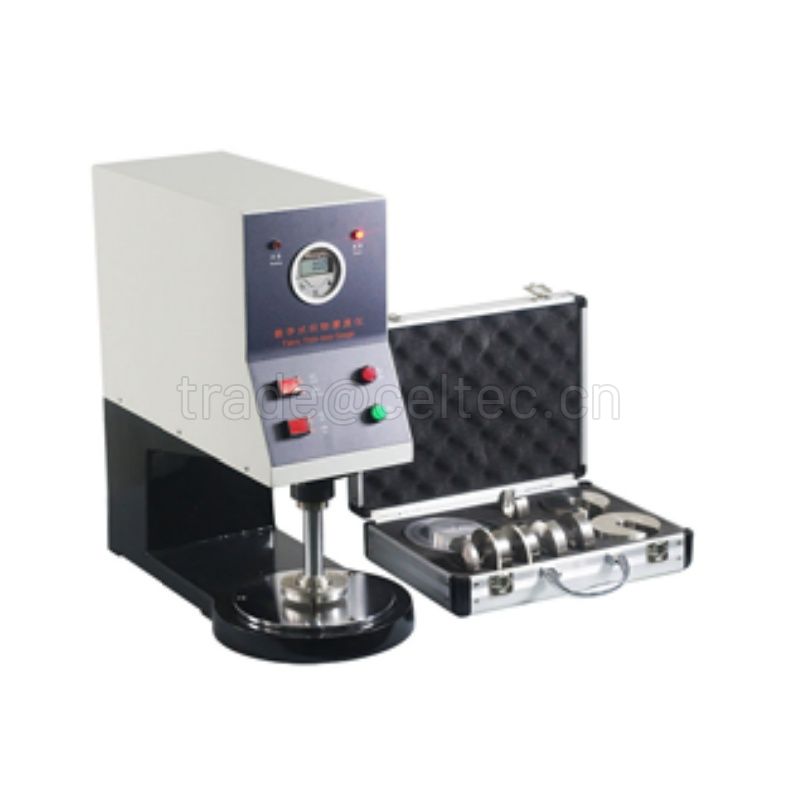
Hva er ASTM D1777?
ASTM D1777 er en standardisert testmetode som brukes internasjonalt for å bestemme tykkelsen på tekstilmaterialer. Metoden går ut på å plassere en stoffprøve mellom en vektet trykkfot og en bunnplate, senke trykkfoten gradvis og måle avstanden mellom de to overflatene for å bestemme tykkelsen på materialet.
Alternative testmetoder til ASTM D1777
I tillegg til ASTM D1777 brukes ulike regionale og internasjonale standarder for å måle tykkelsen på tekstiler og fiberduk. Noen av de mest brukte alternativene er
- GB/T 3820 - Tykkelsesmåling av tekstiler og tekstilprodukter
- GB/T 24218.2 - Prøvingsmetoder for ikke-vevde stoffer, Del 2: Tykkelsesbestemmelse
- ISO 5084:1996 - Internasjonal standard for bestemmelse av tykkelsen på tekstilmaterialer
Hver standard har sine prosessuelle nyanser og må gjennomgås nøye før den implementeres.
Testforhold - temperatur og relativ luftfuktighet
Før testing skal stoffprøvene kondisjoneres i et kontrollert miljø ved 21 ± 1 °C og 65 ± 2% relativ luftfuktighet i minst 4 timer. De samme forholdene må opprettholdes gjennom hele testprosessen for å sikre nøyaktighet og konsistens.
Apparat for ASTM D1777
De viktigste instrumentene som kreves for denne metoden, er blant annet
- Tykkelsesmåler (Thickness Gauge) - tilgjengelig i flere konfigurasjoner; Darong tilbyr for eksempel to ASTM D1777-kompatible modeller.
- Skjæreformer eller stoffmaler - for å forberede prøver som er minst 20% større enn trykkfotens diameter.
ASTM D1777 Testprosedyre
- Slå på stofftykkelsestesteren.
- Konfigurer de riktige testparametrene i henhold til ASTM D1777.
- Velg en trykksettingstid på 10 sekunder eller 30 sekunder, alt etter hva som er aktuelt.
- Ved standard testing brukes en 2000 mm² trykkfot med et trykk på 1000 Pa (tilsvarende en vekt på 200 g).
- Kalibrer testeren ved å nullstille displayet uten en prøve.
- Legg stoffprøven flatt og rynkefritt på testunderlaget.
- Start testen ved å trykke på startknappen.
- Etter den innstilte trykksettingstiden registrerer du tykkelsesverdien som angitt.
- Gjenta prosedyren for hver prøve.
- Beregn og dokumenter resultatene i henhold til standardens krav.
Rapportdannelse
En omfattende tykkelsestestrapport bør inneholde
- Materialopplysninger (fibertype, garnmengde, type veving/strikk, behandlinger osv.)
- Metode for prøvetaking
- Påført testtrykk
- Testdato
- Erklæring som bekrefter samsvar med ASTM D1777
Konklusjon
Tykkelsen på tekstiler er en viktig materialegenskap som påvirker ulike tekstilegenskaper som isolasjon, kompakthet, pusteevne og strukturell integritet. Nøyaktig måling av tykkelsen gir verdifull innsikt i produktutvikling, kvalitetssikring og industriell prosessering. For å sikre pålitelige og repeterbare resultater bør fagfolk alltid ta hensyn til testforhold og påført trykk.
Ekspertråd og bransjeinnsikt
- Unngå å strekke tekstiler under klargjøring, da dette endrer tykkelsesverdiene.
- Kondisjoner alltid prøvene i kontrollerte omgivelser før testing.
- Bruk sirkulære trykkføtter til de fleste materialer, men rektangulære alternativer kan være nødvendige for spesifikke bruksområder.
- Dokumenter alltid det påførte trykket når du rapporterer stoffets tykkelse.
Vanlige spørsmål
Hva er ASTM D1777-96?
En globalt anerkjent testmetode for måling av tykkelsen på tekstilmaterialer, som også kan brukes på lærprodukter og emballasjeunderlag.
Hvilken enhet brukes til å måle stofftykkelse?
Måles vanligvis i millimeter (mm) for å sikre nøyaktighet og konsistens.
Om Cell Instruments
Siden etableringen i 2014, Cell Instruments har raskt markert seg innen utstyr for materialtesting. Vårt omfattende produktsortiment omfatter testing av emballasje, medisinske produkter, næringsmidler, farmasøytiske produkter, vedheft, papir, kartong og tekstiler, med skreddersydde løsninger tilpasset spesifikke bransjebehov.
Med fotavtrykk i over 70 land har Cell Instruments forpliktet seg til å støtte globale bransjer med pålitelig, standardkompatibelt og innovativt testutstyr. Som en pioner innen ingeniørdrevne løsninger streber vi etter å være en integrert partner som bidrar til å forbedre kundenes kvalitetskontroll og FoU-prosesser over hele verden.