Geomembraner spiller en afgørende rolle i inddæmningssystemer såsom lossepladser, minedrift, reservoirer og miljøbeskyttelsesanlæg. Disse fleksible polymerplader skal kunne modstå mekaniske skader under installation og drift. En af de vigtigste mekaniske egenskaber, der vurderes i forbindelse med kvalitetskontrol, er rivestyrke. ASTM D5884 indeholder en standardiseret metode til måling af rivestyrken hos indvendigt forstærkede geomembraner ved hjælp af en kontrolleret laboratorieprocedure.
Forståelse af ASTM D5884 Denne testmetode hjælper ingeniører, kvalitetskontrolører og producenter med at vurdere materialers holdbarhed og sikre pålidelig ydeevne på lang sigt i krævende miljøer.
ASTM D5884 og rivstyrketesten af geomembraner
Den Test af geomembraners rivestyrke undersøger, hvor godt forstærkede geomembraner modstår udbredelsen af et brud, når der først er opstået et snit eller en defekt. Forstærkede geomembraner indeholder indvendige tekstilstrukturer, der forbedrer styrken og formstabiliteten, men deres brudegenskaber afhænger i høj grad af forstærkningstypen og -retningen.
Den ASTM D5884 Metoden måler den maksimale kraft, der kræves for at udvide et brud gennem en forberedt prøve. Prøvningen fokuserer på internt forstærkede geomembraner, hvor tekstilforstærkningen har væsentlig indflydelse på rivningsadfærden.
De vigtigste aspekter af ASTM D5884 Standardudstyret omfatter:
- Måling af rivestyrke både i maskinretningen (MD) og på tværs af maskinretningen (CMD)
- Anvendelse af standardiseret prøvegeometri og kontrolleret forskydningshastighed
- Bestemmelse af maksimal brudbelastning under adskillelsen af prøverne
- Beregning af gennemsnitsværdier baseret på flere prøver for at sikre en pålidelig vurdering
Da rivestyrken kan variere afhængigt af forstærkningens fordeling, fiberretningen og deformationshastigheden, Resultaterne af ASTM D5884 fungerer som et sammenligningsgrundlag snarere end en direkte indikator for præstationerne i praksis.
Tungetestmetode til forstærkede geomembraner
Den metoden med at rive tungen angivet i ASTM D5884 skaber en kontrolleret rivesti, der breder sig på tværs af prøvens bredde. Denne metode giver forskere og kvalitetskontrolpersonale mulighed for at vurdere, hvordan armeringsstrukturen modstår rivningens udbredelse.
I denne fremgangsmåde:
- Der udskæres en rektangulær prøve med en en midterste spalte, der danner to flige
- Hvert sprog fastspændes i de modstående klemmer på en trækprøvemaskine
- Grebene bevæger sig fra hinanden med konstant hastighed
- Bruddet breder sig langs spalten, mens systemet registrerer kraften
Den maksimale belastning, der er målt under denne proces, udgør geomembranens rivestyrke.
Den metoden med at rive tungen er særligt effektiv til armerede materialer, da den tvinger bruddet til at gå gennem den indre tekstilstruktur. Dermed fremhæver testen armeringsfibrenes og bindingsstrukturernes betydning.
Fremgangsmåde ved rivetest af geomembraner
Den rivestest af geomembraner defineret i ASTM D5884 følger en præcis fremgangsmåde for at sikre gentagelige og sammenlignelige resultater.
1. Forberedelse af prøver
- Forbered prøver med standardiserede dimensioner.
- Introducer en 75 mm snit for at danne tungen.
- Sørg for, at prøverne repræsenterer begge langs maskinretningen og på tværs af maskinretningen.
2. Testopsætning
Prøven monteres i en trækprøvemaskine med:
- Grebafstand på 75 mm
- Hvert sprog er centreret i modstående klemmer
Grebene er placeret ca. 38 mm fra skæresnittets ende, hvilket sikrer en ensartet rivning.
3. Testudførelse
Maskinen kører med en konstant hastighed på: 50 ± 2 mm/min
Under testen:
- Instrumentet måler den kraft, der kræves for at udvide bruddet.
- Testen fortsætter, indtil bruddet strækker sig ca. 75–100 mm.
Hvis der opstår brud uden for den tilsigtede bane, eller hvis der vises unormale resultater (en afvigelse på mere end 251 TP4T), kasseres prøven og testes igen.
4. Beregning af resultat
Ifølge ASTM D5884, defineres rivestyrken som:
- Spidsbelastning registreret under adskillelsen
For hver materialeprøve:
- I det mindste fem prøver pr. retning bliver testet.
- Den gennemsnitlig rivestyrke, standardafvigelse og variationskoefficient beregnes.
Betydningen af ASTM D5884-prøvning
Den ASTM D5884 Denne testmetode giver værdifuld indsigt i armerede geomembraners strukturelle integritet. Den anvendes i vid udstrækning til:
- Udvikling og sammenligning af materialer
- Kvalitetskontrol under fremstillingen
- Kontrol af armeringens ydeevne
- Vurdering af forskelle i retningsbestemt styrke
Da forstærkede geomembraner er baseret på indvendige tekstiler, kan rivstyrken variere afhængigt af:
- Fibertype og vævestruktur
- Vedhæftning mellem lag
- Armeringsretning
- Fremstillingsprocesser
Den rivestest af geomembraner giver dermed producenter og projektingeniører mulighed for at finde frem til de mest holdbare armeringskonstruktioner til specifikke anvendelsesformål.
Anbefalet udstyr til ASTM D5884-prøvning
En pålidelig måling af rivestyrke kræver et præcist og stabilt testsystem. En universal trækprøvemaskine med nøjagtig hastighedsregulering og dataindsamling er afgørende for at kunne udføre ASTM D5884 test.
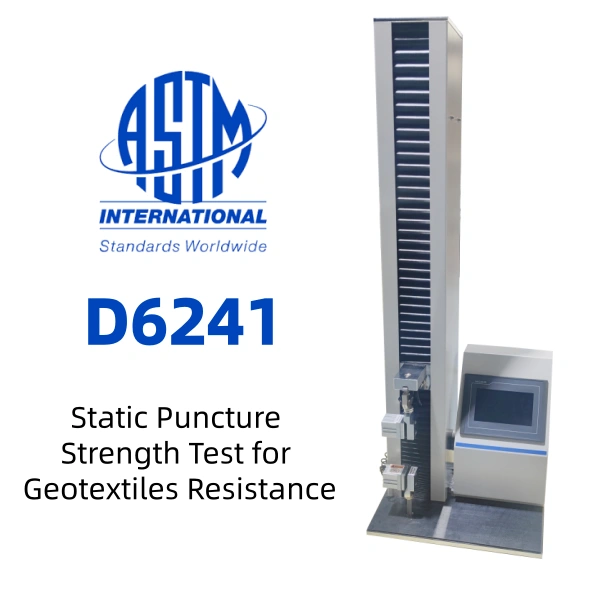
Den Cell Instruments TST-01 Trækprøvemaskine tilbyder en effektiv løsning til laboratorier, der udfører rivestyrkeprøvninger af geomembraner.
Vigtige funktioner omfatter:
- Kugleskruedrev med høj præcision til stabil kontrol af forskydning
- Indstillelige testhastigheder (1–500 mm/min) opfylder kravene i ASTM D5884
- PLC-styring med 7-tommers HMI-berøringsskærm til intuitiv betjening
- Kraft-forskydningskurver i realtid til præcis tåreanalyse
- Kompatibilitet med flere armaturer muliggør udførelse af riv-, træk-, afskalnings- og punkteringsprøvninger på én og samme platform
Med 0,51 TP4T nøjagtighed ved fuld skala og med tilpasselige armaturer giver TST-01 laboratorier mulighed for at udføre rivestyrketest af geomembraner med fremragende repeterbarhed og datapålidelighed.
Forbedring af kvalitetskontrol med ASTM D5884
For producenter og kvalitetskontrolorganer, ASTM D5884 testning er en vigtig del af vurderingen af geomembraner. Regelmæssige rivstyrketests hjælper organisationer med at:
- Identificere svagheder i forstærkningskonstruktioner
- Sammenlign materialer fra forskellige leverandører
- Kontrollere produktionskonsistensen
- Understøtte tekniske beslutninger i forbindelse med udformningen af indeslutningssystemer
Når det indgår i de rutinemæssige kvalitetskontrolprogrammer, er Test af geomembraners rivestyrke sikrer, at forstærkede geomembraner bevarer den mekaniske integritet, der kræves til krævende miljø- og anlægsingeniøropgaver.