
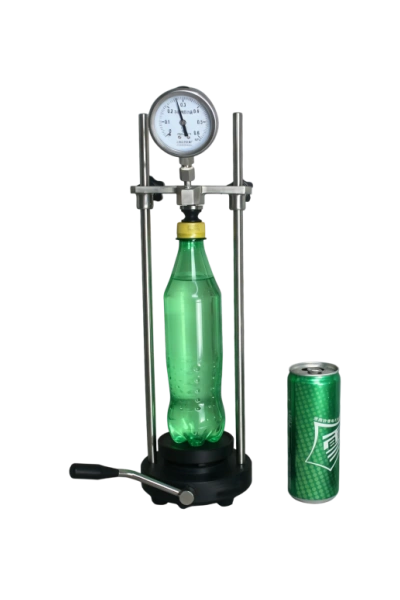
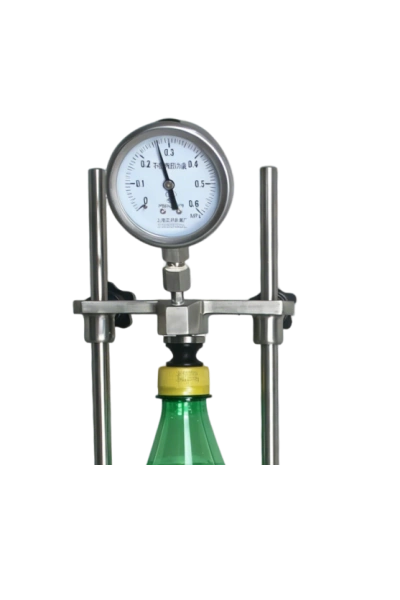
Carbon Dioxide Volume Tester Overview
Carbon dioxide content directly affects beverage taste, mouthfeel, stability, and consumer acceptance. The carbon dioxide volume tester is a professional laboratory instrument designed to determine dissolved CO₂ levels in bottled and canned beverages through pressure and temperature measurement. By analyzing the relationship between internal container pressure and sample temperature, the CLRT-03 Carbonation Tester enables beverage manufacturers, breweries, and quality control laboratories to evaluate carbonation performance accurately and efficiently.
In beverage production, maintaining consistent carbonation is essential for product quality. Variations in CO₂ concentration may influence sensory characteristics, packaging pressure, and shelf-life performance. The CLRT-03 provides a practical testing solution for routine inspection, production monitoring, and research applications by combining a precision pressure gauge with a high-accuracy thermometer in a simple mechanical testing system.
What Is a Carbon Dioxide Volume Tester?
A carbon dioxide volume tester is an analytical device used to measure the amount of dissolved carbon dioxide in carbonated beverages. The instrument determines CO₂ content by measuring the equilibrium pressure inside a sealed beverage container and combining this value with the measured liquid temperature.
Unlike chemical analysis methods that require sample preparation, carbonation testing equipment based on pressure-temperature measurement offers a faster and more convenient approach for quality laboratories. It allows operators to directly evaluate carbonation levels in finished products without complicated procedures.
The CLRT-03 Carbonation Tester is suitable for a wide range of carbonated products, including:
- Beer
- Soft drinks
- Carbonated water
- Sparkling beverages
- Functional drinks
- Other CO₂-containing packaged beverages
By supporting both bottles and cans, the instrument helps manufacturers verify carbonation consistency across different packaging formats.
Why Carbon Dioxide Volume Testing Is Important for Beverage Quality
Carbonation is a key quality parameter in many beverage categories. The dissolved CO₂ level influences not only product flavor but also consumer experience and packaging performance.
Accurate CO₂ measurement helps manufacturers:
- Maintain consistent carbonation specifications between production batches
- Control beverage taste and refreshing characteristics
- Verify filling and packaging process stability
- Prevent under-carbonation or excessive internal pressure
- Support quality inspection during production and final release
For breweries, carbonation level is closely related to beer style requirements and sensory performance. For soft drink producers, CO₂ concentration affects product freshness, carbonation perception, and customer expectations.
信頼できる carbon dioxide volume tester allows quality teams to identify process deviations early and make timely adjustments during production.
Testing Principle of CLRT-03 Carbonation Tester
The CLRT-03 works based on the relationship between dissolved CO₂ concentration, temperature, and pressure.
When a sealed beverage container reaches equilibrium, the pressure inside the package reflects the amount of carbon dioxide dissolved in the liquid. Because CO₂ solubility changes with temperature, both pressure and temperature values are required for accurate evaluation.
The testing principle includes:
- Measuring the internal pressure of the beverage container after piercing.
- Recording the beverage temperature using the integrated thermometer.
- Comparing pressure and temperature data with standard carbonation tables or calculation methods.
- Determining the CO₂ content of the beverage.
This pressure-temperature analysis method is widely recognized in beverage laboratories and is commonly referenced in carbonation measurement procedures such as ASBC beer-13.
Beverage Carbon Dioxide Volume Testing Method Using CLRT-03
について beverage carbon dioxide volume testing method used with CLRT-03 follows a straightforward pressure equilibrium approach.
During testing, the operator securely places the sample container into the instrument and uses the integrated piercing assembly to access the internal gas space. After the pressure stabilizes, the pressure value is recorded. The built-in thermometer then provides the sample temperature measurement required for CO₂ calculation.
This method provides several advantages:
| Testing Feature | Benefit |
|---|---|
| Direct pressure measurement | Provides fast evaluation of carbonation level |
| Temperature compensation | Improves measurement accuracy |
| No chemical reagents required | Simplifies laboratory operation |
| Bottle and can compatibility | Supports different beverage packages |
| Manual operation | Reduces maintenance requirements |
Compared with more complex analytical techniques, this carbonation testing approach is especially suitable for routine quality control where speed, reliability, and operational simplicity are important.
CLRT-03 Carbonation Testing Procedure
The CLRT-03 testing workflow is designed for efficient laboratory operation.
サンプルの準備
The beverage container is selected according to the inspection requirement and placed securely into the testing position. Proper sample handling ensures stable measurement conditions.
Container Piercing
The built-in piercing mechanism creates access to the internal gas space while maintaining the original pressure condition of the package.
Pressure Stabilization
After piercing, the system is allowed to reach equilibrium. The stabilized pressure value represents the internal CO₂ pressure of the beverage container.
Temperature Measurement
The integrated high-accuracy thermometer measures the beverage temperature during testing.
CO₂ Content Calculation
The measured pressure and temperature values are converted into carbon dioxide content using standard carbonation tables or calculation methods.
The complete procedure provides repeatable results with minimal operator training, making it suitable for daily quality inspection environments.
Key Features of CLRT-03 Carbonation Tester
High-Precision Pressure and Temperature Measurement
The CLRT-03 combines accurate pressure detection with temperature measurement to support dependable carbonation analysis.
Main measurement advantages include:
- Precision pressure gauge for stable pressure readings
- High-resolution temperature measurement
- Reliable pressure-temperature data correlation
- Repeatable testing performance for laboratory applications
Accurate measurement of both parameters ensures that CO₂ results reflect the actual carbonation condition of the beverage sample.
Wide Compatibility with Bottled and Canned Beverages
Different beverage manufacturers use various packaging formats, including glass bottles, PET bottles, and cans. The CLRT-03 is designed to accommodate different sample containers, helping laboratories perform carbonation verification across multiple product lines.
Typical applications include:
- Beer bottles and cans
- Carbonated soft drinks
- Sparkling beverages
- New beverage formulation samples
This flexibility allows one instrument to support multiple beverage testing requirements.
Simple Operation and Efficient Testing
As a practical carbonation testing machine, the CLRT-03 focuses on operational efficiency.
The testing process requires only:
- Sample installation
- Container piercing
- Pressure reading
- Temperature recording
- CO₂ value calculation
The mechanical structure reduces system complexity while providing dependable performance for routine beverage inspection.
Durable Design for Long-Term Laboratory Use
The CLRT-03 features a robust mechanical construction suitable for continuous laboratory environments.
Its advantages include:
- Strong structural components
- Reduced maintenance requirements
- Stable operation over long service periods
- Suitable performance for beverage quality control applications
This design makes it an effective choice for beverage producers, breweries, and third-party testing laboratories.
Applications of Carbon Dioxide Volume Testing
A carbon dioxide volume tester plays an important role in beverage production, research, and quality assurance.
Breweries
Breweries use carbonation testing to verify beer CO₂ levels according to product specifications. Consistent carbonation helps maintain expected flavor profiles and drinking characteristics.
Soft Drink Manufacturers
Carbonated beverage producers rely on CO₂ measurement to control product consistency during filling, packaging, and final inspection.
Beverage R&D Laboratories
During new product development, carbonation analysis helps engineers optimize formulations and evaluate packaging performance.
Quality Inspection Organizations
Independent laboratories use carbonation testing equipment for product verification, compliance testing, and customer quality assessment.
Related Standards for Carbonation Testing
The CLRT-03 Carbonation Tester supports testing methods associated with commonly used beverage analysis standards, including:
| スタンダード | 申し込み |
|---|---|
| ASBC beer-13 | Carbon dioxide measurement method for beer analysis |
| GB/T 4928-2001 | Beer analysis methods |
| GB/T 10792-1995 | Carbonated beverages (soft drinks) |
These references provide guidance for determining CO₂ content through pressure and temperature measurement.
技術仕様
| パラメータ | 仕様 |
|---|---|
| Test Item | Carbon Dioxide (CO₂) Content |
| CO₂ Measurement Range | 0 – 4.00 % v/v |
| Pressure Measurement Range | 0 – 0.6 MPa |
| Pressure Resolution | 0.01 MPa |
| Temperature Measurement Range | 0 – 50°C |
| 温度分解能 | 0.1°C |
| Maximum Bottle Height | ≤330 mm / ≤410 mm (depending on model) |
Why Choose CLRT-03 as Your Carbonation Testing Solution?
Selecting suitable carbonation testing equipment is essential for maintaining beverage quality and production efficiency. The CLRT-03 provides manufacturers with a practical solution that combines measurement accuracy, operational simplicity, and broad sample compatibility.
For laboratories requiring dependable CO₂ analysis, the instrument offers:
- Accurate pressure-temperature based measurement
- Compatibility with different beverage packages
- Efficient routine testing workflow
- Low maintenance operation
- Reliable support for quality control programs
Cell Instruments provides professional testing solutions for beverage, packaging, and material analysis applications. Customized fixtures and specialized testing configurations can also be developed according to specific laboratory requirements.
結論
The CLRT-03 Carbonation Tester is a laboratory instrument used to measure dissolved carbon dioxide content and determine carbonation levels, which helps maintain product consistency and optimize filling processes, ensuring customer satisfaction for beverage manufacturers requiring reliable CO₂ testing performance. Cell Instruments offers professional carbonation testing equipment and customized testing solutions to meet laboratory and production requirements. Contact our technical team to learn more about suitable testing configurations and how carbonation analysis can support your quality control process.