
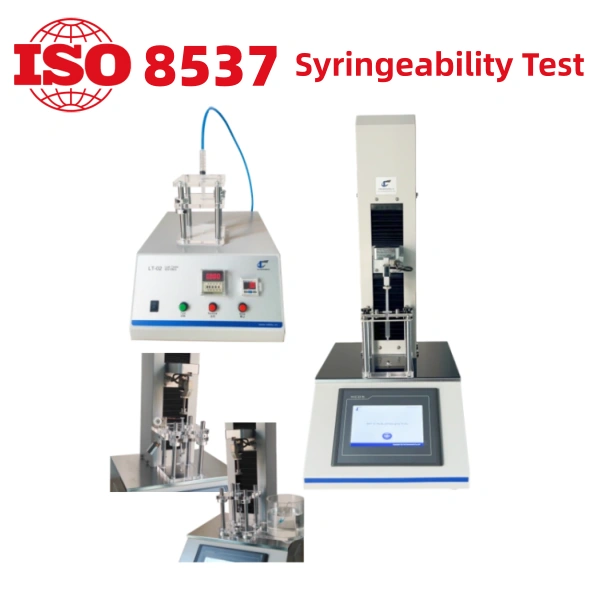
ISO 8537 specifies the requirements and test methods for sterile single-use insulin syringes with or without needles. The standard focuses on syringe safety, functionality, sealing performance, operational force, and dosing accuracy. For syringe manufacturers, medical device laboratories, and quality control teams, ISO 8537 provides a structured framework for evaluating syringe performance under simulated clinical conditions.
Reliable testing under ISO 8537 helps manufacturers reduce leakage risks, improve injection consistency, and ensure patient safety. The standard also supports regulatory compliance and product validation during syringe design, production, and quality inspection.
At Cell Instruments Co., Ltd., advanced material testing systems support syringe manufacturers with accurate force measurement, leakage evaluation, dead space analysis, and customized automation solutions for medical device testing applications.
Why ISO 8537 Testing Matters for Insulin Syringes
Insulin syringes require precise dosage delivery and consistent plunger operation. Even minor leakage, excessive glide force, or inaccurate dead space can influence dosing performance and patient experience.
ISO 8537 addresses several critical syringe performance characteristics:
- Air leakage resistance
- Liquid leakage resistance
- Plunger sealing performance
- Piston operational force
- Needle and hub connection integrity
- Residual volume (dead space)
- Mechanical reliability during aspiration and injection
These evaluations help manufacturers maintain product consistency throughout production and improve confidence during regulatory audits and supplier qualification.
Syringeability Test According to ISO 8537
The syringeability test evaluates the operational performance of the syringe piston during aspiration and injection. The objective is to determine whether the syringe can move smoothly while maintaining sealing integrity and functional stability.
ISO 8537 includes several syringeability-related procedures:
- Piston movement evaluation
- Aspiration leakage assessment
- Compression leakage testing
- Operational force determination
During testing, the syringe is typically filled with distilled water and connected to a reference fitting. Controlled vacuum or pressure conditions are then applied to simulate clinical usage.
Key inspection points include:
- Smooth plunger movement
- Absence of leakage
- Stable piston sealing
- Prevention of rubber stopper separation
- Functional nozzle and needle connection integrity
A universal testing machine equipped with force measurement capability allows accurate recording of piston movement characteristics throughout the test cycle.
Cell Instruments recommends a Medical Packaging and Syringe Force Testing System capable of measuring compression force, aspiration force, and continuous glide force with high precision. Automated data acquisition improves repeatability and reduces operator influence.
Syringe Seal Integrity Test for Leakage Evaluation
The syringe seal integrity test plays a critical role in ISO 8537 compliance because leakage directly affects dosage accuracy and sterility assurance.
The standard evaluates two major leakage conditions:
Air Leakage During Aspiration
ISO 8537 Annex B and Annex F describe vacuum-based leakage testing methods.
In this procedure:
- The syringe is partially filled with distilled water.
- A vacuum condition reaches approximately 88 kPa below atmospheric pressure.
- The operator monitors the syringe for air leakage past piston seals or nozzle connections.
- The vacuum stability remains under observation for 60 seconds.
The test identifies:
- Poor piston sealing
- Defective nozzle connections
- Needle hub leakage
- Rubber stopper detachment
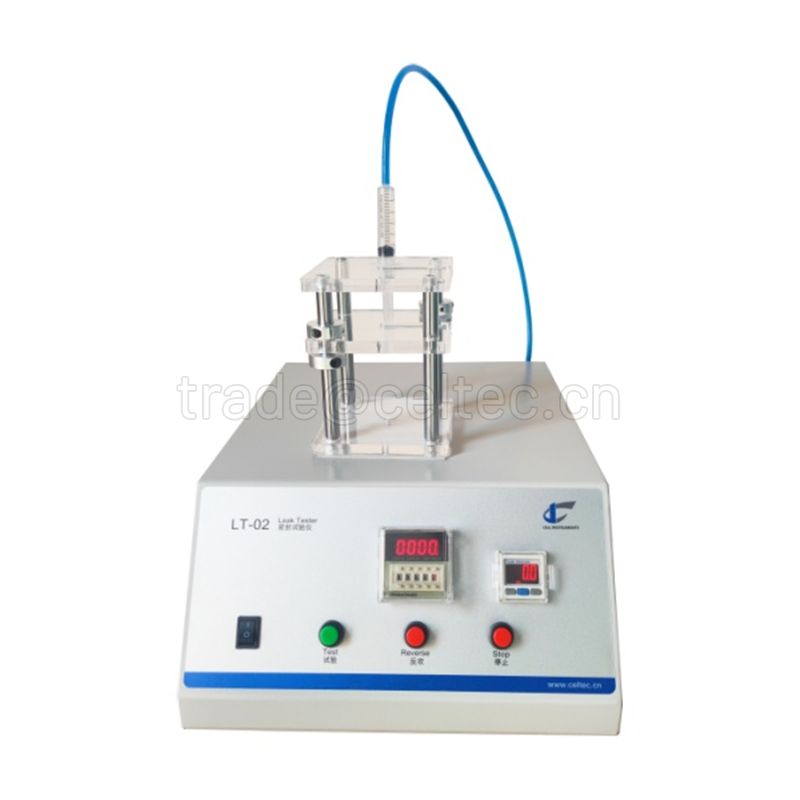
Manufacturers often integrate vacuum leak testing systems with digital pressure monitoring to improve test sensitivity and traceability.
Liquid Leakage During Compression
Annex E evaluates liquid leakage resistance under internal pressure conditions.
The syringe undergoes:
- Internal pressure generation up to 300 kPa
- Side-load application on the plunger
- Leakage inspection at piston seals and nozzle unions
This test simulates real injection stress conditions and helps identify structural weaknesses in syringe assemblies.
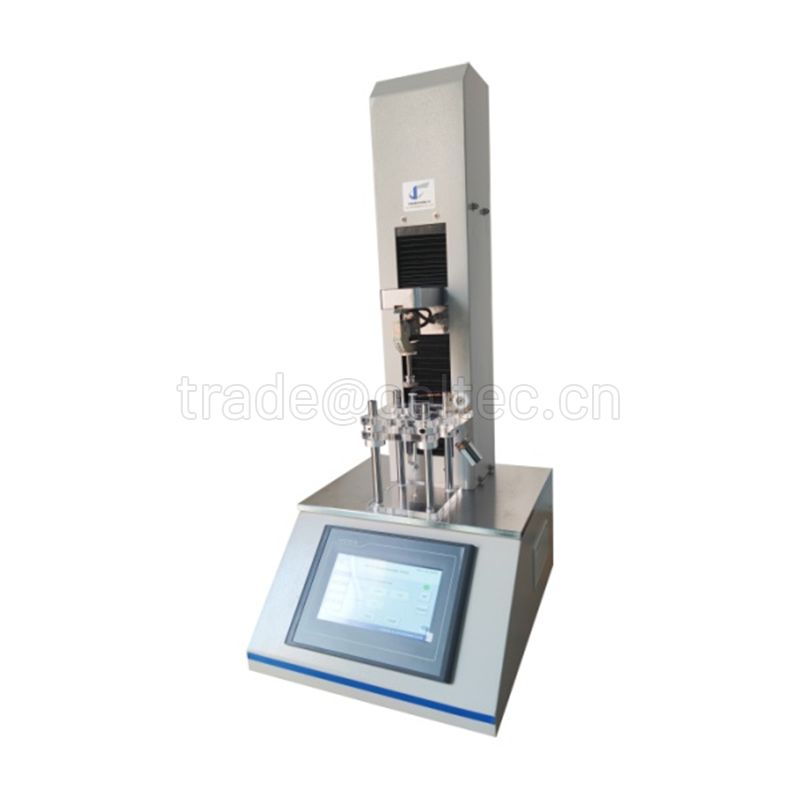
For this application, Cell Instruments can provide customized Leak and Pressure Decay Testing Systems designed for medical syringes and Luer connection evaluation.
Break Loose Glide Force Testing for Piston Performance
The break loose glide force testing procedure in ISO 8537 Annex C measures the force required to initiate and sustain piston movement.
This evaluation directly influences:
- Injection comfort
- Dosage controllability
- User handling performance
- Manufacturing consistency
The test generally includes two force parameters:
Break Loose Force
Break loose force refers to the maximum force required to initiate plunger movement after static contact between the piston and barrel.
High break loose force may indicate:
- Excessive friction
- Inadequate lubrication
- Rubber stopper deformation
- Barrel dimensional inconsistency
Glide Force
Glide force measures the continuous force required to maintain piston movement during water expulsion.
Stable glide force indicates:
- Uniform barrel surface quality
- Proper elastomer compatibility
- Consistent lubrication distribution
ISO 8537 specifies that a mechanical testing machine should apply controlled axial force while recording piston movement.
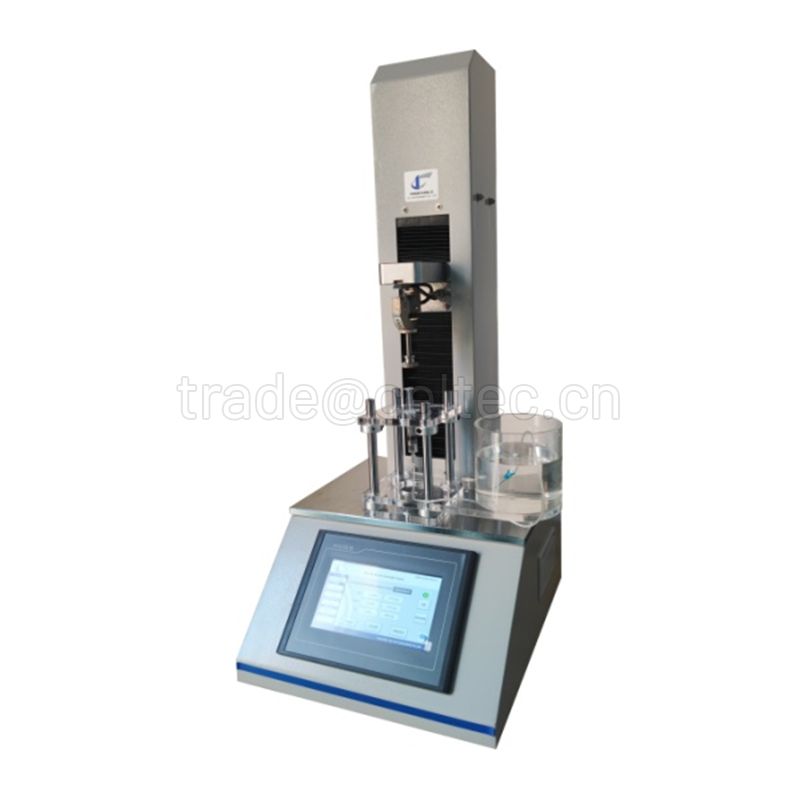
A precision universal testing machine with programmable speed control and force-displacement analysis provides reliable evaluation results. Cell Instruments offers force testing systems specifically designed for syringe plunger characterization and medical device mechanical testing.
Dead Space Measurement in ISO 8537
Dead space measurement determines the residual liquid volume remaining inside the syringe after full plunger depression.
Dead space directly influences:
- Dosage accuracy
- Drug waste reduction
- Insulin delivery precision
- Pharmaceutical cost control
According to ISO 8537 Annex D:
- The empty syringe is weighed with high precision.
- The syringe is filled with distilled water.
- All air bubbles are removed.
- The plunger fully expels the liquid.
- The syringe is reweighed.
- The remaining water mass represents dead space volume.
The standard recommends measurement accuracy to 0.001 g.
Low dead space design is especially important for insulin syringes because even minimal residual volume can affect dosing reliability.
Cell Instruments supports dead space testing through precision balance integration, automated sample handling, and customized residual volume analysis systems.
Common Challenges in ISO 8537 Syringe Testing
Manufacturers frequently encounter several testing challenges during ISO 8537 implementation:
Inconsistent Glide Force Results
Possible causes include:
- Barrel dimensional variation
- Lubrication inconsistency
- Environmental temperature fluctuation
Vacuum Leakage Instability
Possible causes include:
- Improper fixture sealing
- Connector mismatch
- Damaged piston seals
Dead Space Measurement Errors
Possible causes include:
- Air bubble retention
- Incomplete liquid expulsion
- Balance calibration deviation
Proper fixture design, operator training, and automated instrumentation significantly improve test consistency.
FAQs About ISO 8537
What is ISO 8537?
ISO 8537 is an international standard for sterile single-use insulin syringes with or without needles. It defines design requirements and functional testing methods.
What does the syringeability test evaluate?
The syringeability test evaluates piston movement, operational smoothness, sealing performance, and leakage resistance during syringe use.
Why is break loose glide force testing important?
Break loose and glide force testing ensures consistent injection force, user comfort, and reliable dosage delivery.
How is dead space measured in ISO 8537?
The method compares syringe mass before and after liquid expulsion to determine residual liquid volume remaining inside the syringe.
What equipment is used for ISO 8537 testing?
Manufacturers typically use universal testing machines, leak testers, pressure systems, vacuum systems, and precision balances.
Why is syringe seal integrity critical?
Seal integrity prevents air ingress, liquid leakage, contamination risks, and dosage inaccuracies during injection and aspiration.