
Zrozumienie normy ASTM D6241 w badaniach geosyntetyków
ASTM D6241 jest powszechnie uznawanym standardem stosowanym do oceny wytrzymałość na przebicie geowłóknin i materiałów geosyntetycznych. Test określa siłę wymaganą do przebicia próbki za pomocą Sonda cylindryczna o średnicy 50 mm, zapewniając ważną wartość wskaźnika do oceny trwałości mechanicznej tych materiałów.
W zastosowaniach inżynierii lądowej, takich jak wykładziny składowisk odpadów, budowa dróg i systemy odwadniające, geowłókniny muszą wytrzymywać naprężenia powodowane przez kruszywa, cząstki gleby i obciążenia instalacyjne. W tym celu Metoda ASTM D6241, powszechnie określany jako Test przebicia CBR, symuluje skoncentrowane siły, które mogą wystąpić podczas instalacji lub serwisowania.
Poprzez pomiar maksymalna siła wymagana do rozerwania materiału, Inżynierowie i specjaliści ds. kontroli jakości mogą ocenić, czy produkt geosyntetyczny zapewnia odpowiednią odporność na przebicie.
Statyczny test wytrzymałości na przebicie geosyntetyku
The statyczny test wytrzymałości na przebicie materiałów geosyntetycznych zapewnia pomiar wskaźnika, który odzwierciedla odporność materiału na miejscowe obciążenie. Metoda ta polega na przyłożeniu pionowej siły przez stalową sondę do środka zaciśniętej próbki, aż do jej pęknięcia.
W przeciwieństwie do testów na rozciąganie, które oceniają wytrzymałość przy jednolitym naprężeniu, ten test tworzy wielokierunkowe naprężenia wokół końcówki sondy. Ten wzór naprężeń lepiej odzwierciedla rzeczywiste warunki, w których ostre kamienie lub obciążenia mechaniczne naciskają na powierzchnię geowłókniny.
Kluczowe cechy tego testu obejmują:
- Średnica sondy: 50 ± 1 mm cylinder z polerowanej stali
- Promień krawędzi sondy: 2,5 ± 0,5 mm
- Mocowanie próbki: Okrągłe pierścienie zaciskowe zapobiegające poślizgowi
- Prędkości testowe: Zwykle 30 mm/min, 50 mm/min lub 100 mm/min
- Zmierzony wynik: Maksymalna siła wymagana do przebicia próbki
The maksymalne obciążenie zarejestrowane podczas penetracji reprezentuje statyczna wytrzymałość na przebicie materiału.
Wartość ta zapewnia inżynierom wiarygodny wskaźnik odporności materiału na Zlokalizowane odkształcenie i pęknięcie.
Test odporności na przebicie dla geowłóknin
The test odporności na przebicie dla geowłóknin ocenia trwałość mechaniczną tkanin stosowanych w warstwach filtracyjnych, separacyjnych, wzmacniających i ochronnych w systemach geotechnicznych.
W praktycznych zastosowaniach geowłókniny często napotykają na ostre kruszywa, obciążenia konstrukcyjne i naprężenia skupione. Metoda ASTM D6241 pomaga określić, czy materiał może wytrzymać takie siły bez rozerwania lub pęknięcia.
Typowe oceniane materiały obejmują:
- Tkane geowłókniny
- Geowłókniny
- Kompozyty geosyntetyczne
- Geokompozyty drenażowe
- Tkaniny wzmacniające
Ponieważ wiele geosyntetyków może wykazywać różne właściwości po każdej stronie ze względu na procesy produkcyjne, Niektóre materiały wymagają testowania na obu powierzchniach w celu uzyskania pełnych danych dotyczących wydajności.
Zespoły ds. zapewniania jakości polegają na Wyniki testów ASTM D6241 przy wyborze geowłóknin dla wymagających środowisk budowlanych.
Aparatura i sprzęt testowy ASTM D6241
Norma określa kilka podstawowych elementów wymaganych do dokładnego przeprowadzenia testu.
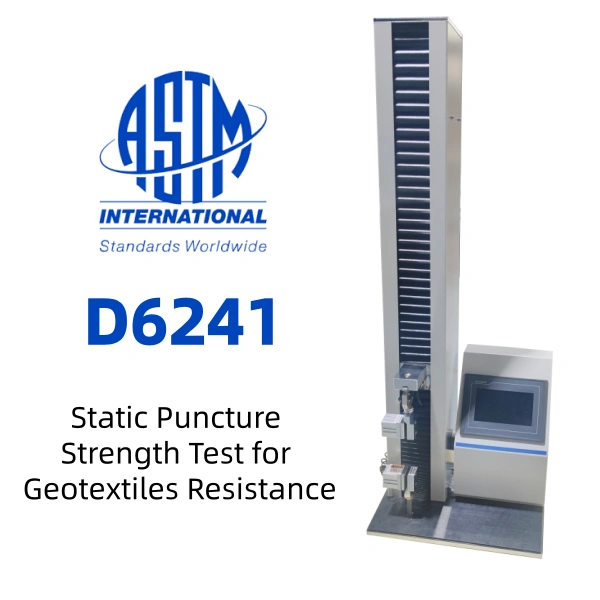
Maszyna testująca
Test wykorzystuje maszyna wytrzymałościowa o stałej prędkości rozciągania lub stałej prędkości poprzecznej zdolne do kontrolowanego przemieszczania i rejestrowania siły.
Instrument powinien zapewniać:
- Stabilny pomiar obciążenia
- Kontrolowana prędkość trawersy
- Ciągłe rejestrowanie siły
Nowoczesne testery rozciągania zapewniają również cyfrowe wyświetlanie krzywych i automatyczne rejestrowanie wyników.
Sonda nakłuwająca
Sonda odgrywa kluczową rolę w spójności testu. Według ASTM D6241, Sonda musi spełniać rygorystyczne wymagania dotyczące wymiarów:
- Średnica: 50 ± 1 mm
- Cylindryczna konstrukcja stalowa
- Polerowana powierzchnia
- Zaokrąglona krawędź promieniowa
Specyfikacje te zapewniają Powtarzalny rozkład naprężeń podczas nakłucia.
Urządzenie zaciskowe
Próbka jest zabezpieczona pomiędzy koncentryczne okrągłe płytki zaciskowe.
Ważne funkcje zacisku obejmują:
- Średnica wewnętrzna ok. 150 mm
- Powierzchnie antypoślizgowe (ząbkowanie, radełkowanie lub papier ścierny)
- Bezpieczny system dokręcania śrub
Prawidłowe mocowanie zapobiega ruchom próbki, które w przeciwnym razie mogłyby wpłynąć na zmierzoną siłę przebicia.
Przegląd procedury testowej ASTM D6241
The Procedura ASTM D6241 postępuje zgodnie z ustrukturyzowaną sekwencją, aby zapewnić powtarzalne wyniki.
Przygotowanie próbki
Próbki testowe są wycinane z próbki laboratoryjnej pobranej na całej szerokości rolki geowłókniny. Norma zaleca unikanie obszarów krawędzi i uszkodzonych sekcji.
O ile nie określono inaczej, dziesięć okazów są powszechnie stosowane, gdy nie są dostępne dane statystyczne dotyczące zmienności.
Konfiguracja testu
Operator zaciska próbkę pomiędzy okrągłymi płytkami bez stosowania naprężenia. Krawędzie próbki wystają poza pierścień zaciskowy, aby zapewnić odpowiednie podparcie.
Sonda jest umieszczona bezpośrednio nad środkiem niepodpartego obszaru testowego.
Wykonanie testu
Maszyna wytrzymałościowa przesuwa sondę pionowo w kierunku próbki z określoną prędkością. Gdy sonda penetruje materiał, siła wzrasta aż do momentu pęknięcia.
System rejestruje:
- Maksymalna siła przebicia
- Przemieszczenie przy zerwaniu
- Jakikolwiek poślizg próbki podczas testu
Jeśli poślizg przekracza 5 mm, wynik musi zostać odrzucony, a próbka ponownie przebadana.
Obliczanie wyniku
Ostatecznym wynikiem jest średnia wytrzymałość na przebicie uzyskane ze wszystkich ważnych próbek. Niektórzy klienci mogą również zażądać średnie przemieszczenie przy sile szczytowej.
Wartości te dostarczają przydatnych danych do porównywania materiałów lub weryfikacji zgodności ze specyfikacjami projektu.
Zalecany sprzęt do testów ASTM D6241
Niezawodne testowanie wymaga precyzyjnej kontroli obciążenia i dokładnego pomiaru przemieszczenia. A uniwersalna maszyna do prób rozciągania wyposażony w dedykowany uchwyt do nakłuwania jest powszechnie używany.
The Cell Instruments TST-01 Tester rozciągania zapewnia skuteczne rozwiązanie dla laboratoriów wykonujących Test odporności na przebicie ASTM D6241.
Kluczowe zalety obejmują:
- System sterowania oparty na PLC zapewnienie stabilnego wykonania testów
- Szeroki zakres regulacji prędkości (1-500 mm/min) zgodność z prędkościami testowymi ASTM
- Precyzyjna kontrola przemieszczenia do dokładnego pomiaru odkształceń
- Kompatybilność z wieloma urządzeniami, umożliwiając temu samemu systemowi wykonywanie testów na rozciąganie, odrywanie, rozrywanie i przebicie
- Wizualizacja krzywej w czasie rzeczywistym poprzez 7-calowy interfejs z ekranem dotykowym
Dzięki solidnej konstrukcji mechanicznej i elastycznej konfiguracji, TST-01 zapewnia długoterminową niezawodność w laboratoria testujące geosyntetyki, instytuty badawcze i zakłady kontroli jakości.
Dlaczego norma ASTM D6241 ma znaczenie dla zapewnienia jakości?
Dla materiałów geosyntetycznych stosowanych w projektach infrastrukturalnych, Odporność na przebicie bezpośrednio wpływa na długoterminową wydajność. Niewystarczająca wytrzymałość na przebicie może prowadzić do:
- Uszkodzenie membrany podczas instalacji
- Zmniejszona wydajność filtracji lub separacji
- Uszkodzenie strukturalne w warstwach ochronnych
Poprzez wdrożenie ASTM D6241 testowanie, Producenci i inżynierowie mogą:
- Obiektywne porównanie wydajności materiałów
- Weryfikacja zgodności ze specyfikacjami projektu
- Lepsza konstrukcja i trwałość produktu
- Bezpieczniejsze instalacje geotechniczne
Ponieważ projekty infrastrukturalne nadal rozwijają się na całym świecie, niezawodne standardy testowania geowłóknin, takie jak ASTM D6241 odgrywają kluczową rolę w utrzymaniu jakości inżynieryjnej.