
Application
그리고 glass grain hydrolytic resistance tester in medicinal glass packaging is an essential quality control test designed to assess the chemical stability of glass material against water. This test helps to determine the extent to which the packaging materials will interact with the pharmaceuticals they contain, potentially affecting the stability and safety of the medications. The hydrolytic resistance of glass grains is a crucial property that measures the durability of glass when exposed to water. This test evaluates how well glass grains withstand hydrolytic attack, which is essential for ensuring the quality and longevity of glass used in various applications, especially in pharmaceuticals and packaging.
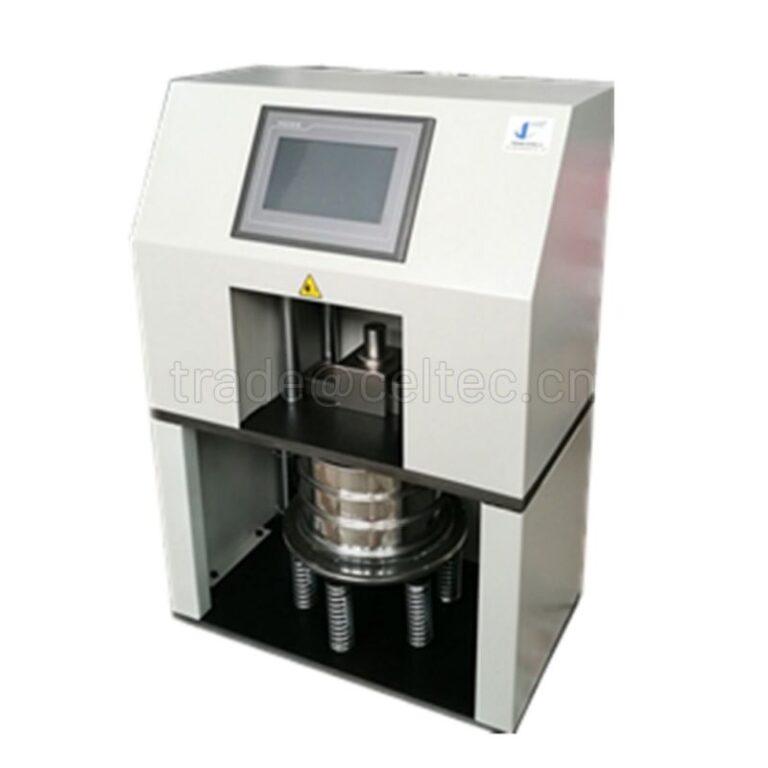
The Glass Grain Hydrolytic Resistance Tester (GGHRT) is a specialized instrument designed to measure the hydrolytic resistance of glass grains. This device is essential for assessing the durability and stability of glass materials when exposed to water and other liquids.
그리고 GHR-01A Glass Grain Hydrolytic Resistance Tester is applicable for the preparation of water resistance samples of glass granules used in medical glass products such as infusion bottles, injection bottles, ampoule bottles, and oral liquid bottles.
Based on the requirements for water resistance sample preparation of glass granules, the process intelligently carries out the crushing of glass and automatic vibratory sieving, featuring a high degree of automation in the equipment.
Standards of Glass Grain Hydrolytic Resistance Tester
ISO 719: Glass – Hydrolytic resistance of glass grains at 98℃ – Test method and classification
ISO 720: Glass – Hydrolytic resistance of glass grains at 121℃ – Test method and classification
Test Principle of Glass Grain Hydrolytic Resistance Tester
그리고 glass sample is placed into the mortar, where the pestle automatically descends and smashes the glass product into fragments. The tester then automatically vibrates the set of sieves, separating the qualified samples from the glass granule waste for collection.
Features and Benefits of Glass Grain Hydrolytic Resistance Tester
1. Smartly automated, the tester combines crushing and vibration sieving into one unit, selecting standard-compliant sample sizes.
2. HMI screen operations ensure straightforward human-machine interaction.
3. With less manual handling, sample preparation is safer for personnel.
4. Safety devices shield against glass splatters, maintaining test integrity.
5. The eco-friendly process includes specialized glass waste collection.
6. Automated sieving boosts test precision.
7. A limit switch function adds automatic safety measures.
8. Its vertical design lessens gravitational effects on samples, ideal for larger sizes.
Main Parameters of Glass Grain Hydrolytic Resistance Tester
| Mortar/Pestle Dimension | Φ50/Φ48 mm |
| Sieve A Aperture | 425μm |
| Sieve B Aperture | 300μm |
| Sieve O Aperture | 600μmμm |
| Sieve Shaking Duration | 5min |
| Gas Pressure | 0.5 Mpa |
| Gas Port Size | Ф6 mm |
| Power | AC 110~220V 50Hz |
이 제품에 대한 자세한 정보가 필요하시면 언제든지 문의해 주세요. 다른 인기 제품을 추천해 주세요: 자동 캡슐 경도 시험기, Aluminum-Plastic Combination Cap Opening Force Tester
 한국어
한국어  English
  العربية
  Български
  Čeština
  Dansk
Dansk  Deutsch
  Ελληνικά
  Español
  Eesti
Eesti  Suomi
Suomi  Français
  Magyar
  Bahasa Indonesia
  Italiano
  日本語
日本語  Lietuvių kalba
  Latviešu valoda
  Norsk bokmål
  Nederlands
  Polski
  Português
  Română
  Русский
  Slovenčina
  Slovenščina
  Svenska
  Türkçe
  Українська