
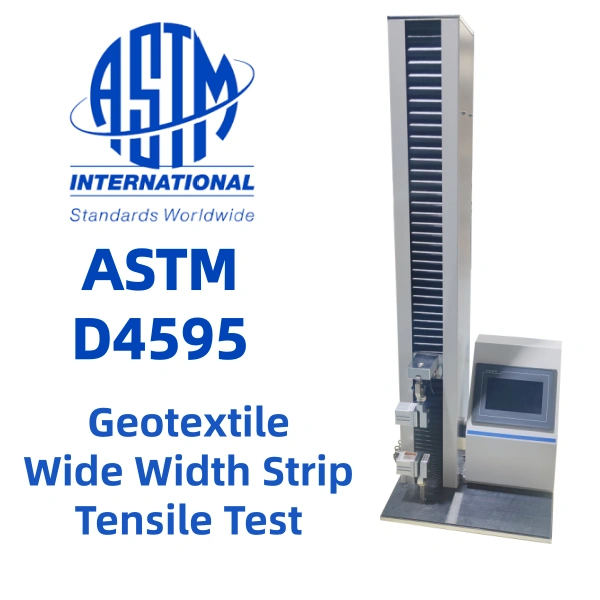
ASTM D4595 Nedir ve Neden Önemlidir?
ASTM D4595 değerlendirmek için standartlaştırılmış bir yöntem tanımlar. jeotekstillerin gerilme özellikleri geniş bir numune kullanarak. Dar şerit testlerinden farklı olarak, bu yöntem daralma gibi kenar etkilerini en aza indirir ve gerçek hayattaki mühendislik davranışları.
Mühendisler, aşağıdakiler gibi temel parametreleri elde etmek için ASTM D4595 standardına başvururlar:
- Çekme mukavemeti
- Kopma uzaması
- Başlangıç modülü ve kesen modülü
- Dayanıklığın sınırları
Bu değerler, şu tasarımın temelini oluşturur: takviyeli zemin yapılar, setler ve yol şeritleri, jeotekstillerin çekme gerilimi altında performans göstermesi gereken yerlerde.
Geniş Şerit Çekme Testi Prensibi
Bu geniş şerit çekme testi genişliği boyunca sıkıştırılmış ve kopana kadar sabit bir hızda gerilen nispeten büyük bir numune kullanır.
Başlıca özellikleri şunlardır:
- Numune genişliği azalır yerel deformasyon
- Yük, lifler arasında daha eşit bir şekilde dağılır
- Sonuçlar gerçeğe oldukça yakındır sahada gösterilen performans
Test sırasında sistem, gerilme-uzama eğrisi, ve bu, hesaplanan tüm mekanik özelliklerin temelini oluşturur.
Geotekstil Genişlik Çekme Mukavemeti ve Temel Hesaplamalar
Bu Geniş genişlikli geotekstilin çekme mukavemeti numunenin kırılması için gereken birim genişlik başına maksimum kuvveti ifade eder.
Çekme Mukavemeti Formülü
σf = WsFf
Nerede?
- σf = çekme mukavemeti
- Ff = kopma kuvveti
- Ws = numune genişliği
Uzama Hesaplaması
Uzama, malzemenin kopmadan önce ne kadar gerilebileceğini gösterir:ε = Ls × ΔL × 100
Modül Değerlendirmesi
ASTM D4595 standardı çeşitli modül türlerini tanımlamaktadır:
- İlk modül – yükleme başlangıcında sertlik
- Ofset modülü – ayarlanmış sertlik referansı
- Sekant modülü – belirli gerilmedeki sertlik (örn. 2%, 5%, 10%)
Bu parametreler şunlar için hayati önem taşır: tasarım modellemesi ve deformasyon tahmini.
CRE Çekme Test Makinesi Gereksinimleri
A CRE çekme test makinesi (Sabit Uzatma Oranı) ASTM D4595 standardına uygunluk açısından hayati önem taşır. Tekrarlanabilirliği sağlamak için kontrollü ve sabit bir uzama hızı uygular.
Temel Gereksinimler:
- Sabit gerilme hızı: 10 ± 3 %/dk
- İçinde doğru kuvvet ölçümü 10–90% tam ölçek
- Kaymayı veya çene kırılmalarını önlemek için uygun sıkıştırma sistemi
- Kaydetme özelliği gerilme-uzama eğrileri
Önerilen Ekipman: Cell Instruments Çekme Test Cihazı
Aşağıdakileri arayan laboratuvarlar için hassasiyet ve verimlilik, Cell Instruments TST-01 Çekme Test Cihazı ASTM D4595 testleri için güvenilir bir çözüm sunar.
Neden ASTM D4595 uygulamaları için uygundur:
- Kararlı PLC kontrolü + 7 inçlik HMI gerçek zamanlı eğri görselleştirme için
- Geniş hız aralığı (1-500 mm/dak) gerilme hızı gerekliliklerini karşılamak için
- Yüksek hassasiyet (0,51 TP4T FS) güvenilir sonuçlar sağlar
- Özelleştirilebilir armatürler farklı jeotekstil yapıları için
- Akıcı hareket sistemi test sonuçlarındaki değişkenliği azaltır
Sağlam tasarımı sayesinde uzun vadeli endüstriyel kullanım, ... bu da onu jeotekstil malzemeleriyle çalışan kalite kontrol laboratuvarları ve araştırma kurumları için ideal hale getirir.
Test Prosedürüne Genel Bakış
Tipik bir ASTM D4595 testi aşağıdaki adımları içerir:
Numune Hazırlama
- Kenar daralmasını en aza indirmek için geniş numuneler kullanın
- Kontrollü ortamda numunelerin muhafaza edilmesi
Makine Kurulumu
- Ölçü uzunluğunu ayarla (genellikle 100 mm)
- Yanlış yerleştirmeyi önlemek için numuneyi dikkatlice hizalayın
- Minimum ön gerilim uygulayın (kopma kuvveti <1%)
Test
- Test, kopma noktasına kadar sürdürülmelidir
- Kuvvet ve uzamayı sürekli olarak kaydedin
Sonuç Doğrulama
- Aşağıdakilerden kaynaklanan geçersiz sonuçları eleyin:
- Çene kırıkları
- Kayma
- Anormal sapmalar
Mühendislik Uygulamalarında ASTM D4595 Standardının Önemi
ASTM D4595 şu alanlarda hayati bir rol oynamaktadır:
- Zemin güçlendirme tasarımı
- Şev stabilizasyon sistemleri
- İstinat duvarı takviyesi
- Yol ve kaldırım mühendisliği
Dar şerit testlerine kıyasla, bu yöntem daha güvenilir tasarım parametreleri, özellikle de dokunmamış jeotekstiller.
SSS
1. ASTM D4595 standardını koparma çekme testlerinden ayıran nedir?
ASTM D4595 standardı, kenar etkilerini azaltan ve tek parça numune testlerine kıyasla daha gerçekçi bir çekme davranışı sağlayan geniş bir numune kullanır.
2. ASTM D4595 standardı hem dokunmuş hem de dokunmamış jeotekstilleri test edebilir mi?
Evet, bu durum dokunmuş, dokunmamış, katmanlı ve örülmüş jeotekstiller.
3. Neden bir CRE çekme test cihazı gereklidir?
Bir CRE sistemi şunları sağlar sabit gerilme hızı, ; bu, tekrarlanabilirlik ve standartlara uygunluk açısından hayati önem taşır.
4. Test sonuçlarının geçersiz çıkmasına ne sebep olur?
Yaygın nedenler şunları içerir çene kırılmaları, kayma ve numunenin yanlış hizalanması.
5. Islak testlere izin veriliyor mu? ASTM D4595?
Evet, bu yöntem şunlara yönelik prosedürler içermektedir: hem kurutulmuş hem de ıslak numuneler.