
Izpratne par ASTM D6241 ģeosintētisko materiālu testēšanā
ASTM D6241 ir plaši atzīts standarts, ko izmanto, lai novērtētu ģeotekstiliju un ar ģeosintētiskiem materiāliem saistīto materiālu caurduršanas izturība.. Testā nosaka spēku, kas nepieciešams, lai caurdurtu paraugu, izmantojot 50 mm diametra cilindriskā zonde, kas ir svarīga indeksa vērtība šo materiālu mehāniskās izturības novērtēšanai.
Inženiertehniskajos būvdarbos, piemēram, atkritumu poligonu oderējumos, ceļu būvē un drenāžas sistēmās, ģeotekstilam jāiztur pildvielu, augsnes daļiņu un instalācijas slodžu radītās slodzes. . ASTM D6241 metode, ko parasti dēvē par CBR punkcijas tests, simulē koncentrētus spēkus, kas var rasties uzstādīšanas vai apkopes laikā.
Mērot maksimālais spēks, kas vajadzīgs, lai pārrautu materiālu, inženieri un kvalitātes kontroles speciālisti var novērtēt, vai ģeosintētiskais izstrādājums ir pietiekami izturīgs pret caurduršanas bojājumiem.
Ģeosintētisko materiālu statiskās caurduršanas izturības tests
Portāls ģeosintētisko materiālu statiskās caurduršanas izturības tests nodrošina indeksa mērījumu, kas atspoguļo materiāla izturību pret lokalizētu slodzi. Ar šo metodi ar tērauda zondes palīdzību vertikāls spēks iedarbojas uz iespīlēta parauga centru, līdz notiek plīsums.
Atšķirībā no stiepes testēšanas, kurā tiek novērtēta izturība pie viendabīgas slodzes, šis tests rada daudzvirzienu spriegums ap zondes galu.. Šis sprieguma modelis labāk atbilst reālajiem apstākļiem, kad asus akmeņus vai mehāniskas slodzes spiež pret ģeotekstila virsmu.
Šī testa galvenie raksturlielumi ir šādi:
- Zondes diametrs: 50 ± 1 mm pulēta tērauda cilindrs
- Zondes malas rādiuss: 2,5 ± 0,5 mm
- Paraugu stiprināšana: Apļveida skavu gredzeni, kas novērš slīdēšanu
- Testa ātrumi: Parasti 30 mm/min, 50 mm/min vai 100 mm/min
- Izmērītais rezultāts: Maksimālais spēks, kas nepieciešams parauga caurduršanai
Portāls maksimālā reģistrētā slodze iespiešanās laikā ir statiskā caurduršanas izturība materiāla.
Šī vērtība nodrošina inženieriem uzticamu rādītāju par materiāla izturību pret lokalizētas deformācijas un plīsumi.
Ģeotekstilizstrādājumu izturības pret caurduršanu tests
Portāls ģeotekstilmateriālu izturības pret caurduršanu tests novērtē to audumu mehānisko izturību, kurus izmanto filtrācijas, atdalīšanas, pastiprināšanas un aizsardzības slāņos ģeotehniskajās sistēmās.
Ģeotekstiliju praktiskajā pielietojumā bieži sastopas ar asas pildvielas, celtniecības slodzes un koncentrētas slodzes.. ASTM D6241 metode palīdz noteikt, vai materiāls var izturēt šādus spēkus bez plīsumiem vai plīsumiem.
Parasti tiek vērtēti šādi materiāli:
- Austs ģeotekstils
- Neaustie ģeotekstilmateriāli
- Ģeosintētiskie kompozīti
- Drenāžas ģeokompozīti
- Pastiprinošie audumi
Tā kā daudzām ģeosintētiskām vielām var piemist atšķirīgas īpašības katrā pusē ražošanas procesu dēļ., lai iegūtu pilnīgus veiktspējas datus, dažiem materiāliem jāveic testēšana uz abām virsmām.
Kvalitātes nodrošināšanas komandas paļaujas uz ASTM D6241 testa rezultāti izvēloties ģeotekstilmateriālus sarežģītām būvniecības vidēm.
ASTM D6241 testēšanas aparatūra un aprīkojums
Standartā ir norādītas vairākas būtiskas sastāvdaļas, kas nepieciešamas, lai precīzi veiktu testu.
Testēšanas mašīna
Testā tiek izmantots testēšanas iekārta ar konstantu stiepes ātrumu vai konstantu šķērsgriezuma ātrumu ar ko var veikt kontrolētu pārvietojumu un reģistrēt spēku.
Instrumentam jānodrošina:
- Stabila slodzes mērīšana
- Kontrolēts krustgalvas ātrums
- Nepārtraukta spēka reģistrēšana
Mūsdienu stiepes testeri nodrošina arī digitālo līknes displeju un automātisku rezultātu reģistrēšanu.
Punktēšanas zonde
Zondei ir izšķiroša nozīme testa konsekvences nodrošināšanā. Saskaņā ar ASTM D6241, zondei jāatbilst stingrām izmēru prasībām:
- Diametrs: 50 ± 1 mm
- Cilindriska tērauda konstrukcija
- Pulēta virsma
- Noapaļota radiālā mala
Šīs specifikācijas nodrošina atkārtojams sprieguma sadalījums punkcijas laikā.
Saspiešanas ierīce
Paraugu nostiprina starp koncentriskas apļveida skavas plāksnes.
Svarīgas skavas funkcijas:
- Iekšējais diametrs aptuveni 150 mm
- Pretslīdes virsmas (robojums, rievojums vai smilšpapīrs)
- Droša skrūvju pievilkšanas sistēma
Pareiza fiksācija novērš parauga kustību, kas pretējā gadījumā varētu ietekmēt izmērīto punkcijas spēku.
ASTM D6241 testa procedūras pārskats
Portāls ASTM D6241 procedūra tiek ievērota strukturēta secība, lai nodrošinātu atkārtojamus rezultātus.
Parauga sagatavošana
Testa paraugus izgriež no laboratorijas parauga, kas ņemts visā ģeotekstila ruļļa platumā. Standartā ieteikts izvairīties no malu zonām un bojātiem posmiem.
Ja vien nav norādīts citādi, desmit paraugi parasti izmanto, ja nav pieejami dati par statistiskajām novirzēm.
Testa iestatīšana
Operators iespīlē paraugu starp apaļām plāksnēm, nepiemērojot spriegojumu. Parauga malas sniedzas ārpus skavas gredzena, lai nodrošinātu pareizu atbalstu.
Zondi novieto tieši virs neatbalstītā testa laukuma centra.
Testa izpilde
Testēšanas iekārta pārvieto zondi vertikāli pret paraugu ar norādīto ātrumu. Kad zonde iekļūst materiālā, spēks palielinās, līdz notiek plīsums.
Sistēma ieraksta:
- Maksimālais caurduršanas spēks
- Izspiešana plīsuma brīdī
- Jebkāda parauga noslīdēšana testa laikā
Ja slīdēšana pārsniedz 5 mm, rezultāts ir jāizmet un paraugs jāpārbauda atkārtoti.
Rezultātu aprēķināšana
Galīgais rezultāts ir vidējā caurduršanas izturība iegūti no visiem derīgajiem paraugiem. Daži klienti var arī pieprasīt vidējais pārvietojums pie maksimālā spēka.
Šīs vērtības sniedz noderīgus datus materiālu salīdzināšanai vai atbilstības projekta specifikācijām pārbaudei.
Ieteicamais aprīkojums ASTM D6241 testēšanai
Lai testēšana būtu uzticama, nepieciešama precīza slodzes kontrole un precīzi pārvietojuma mērījumi. A universālā stiepes testēšanas iekārta parasti izmanto ar īpašu caurumošanas ierīci.
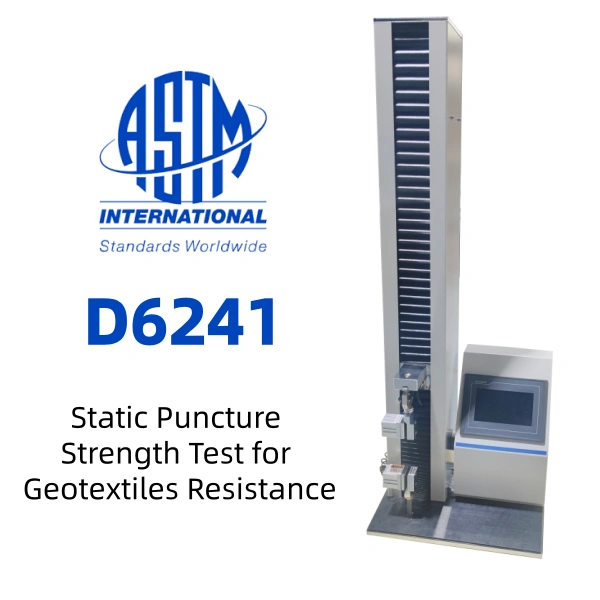
Portāls Cell Instruments TST-01 Stiepes testeris nodrošina efektīvu risinājumu laboratorijām, kas veic ASTM D6241 izturības pret caurduršanu testēšana.
Galvenās priekšrocības:
- Uz PLC balstīta vadības sistēma nodrošināt stabilu testu izpildi
- Plašs regulējams ātruma diapazons (1-500 mm/min) saderīgs ar ASTM testa ātrumiem
- Augstas precizitātes pārvietojuma kontrole precīzai deformācijas mērīšanai
- Vairāku ķermeņu savietojamība, kas ļauj ar vienu un to pašu sistēmu veikt stiepes, plīšanas, plīsuma un caurduršanas testus.
- Reāllaika līknes vizualizācija izmantojot 7 collu skārienekrāna saskarni
TST-01 ar izturīgu mehānisko konstrukciju un elastīgu konfigurāciju nodrošina ilgtermiņa uzticamību. ģeosintētisko materiālu testēšanas laboratorijas, pētniecības institūti un kvalitātes kontroles iestādes..
Kāpēc ASTM D6241 ir svarīgs kvalitātes nodrošināšanai
Ģeosintētiskajiem materiāliem, ko izmanto infrastruktūras projektos, izturība pret caurduršanu tieši ietekmē veiktspēju ilgtermiņā.. Nepietiekama caurduršanas izturība var izraisīt:
- Membrānas bojājumi uzstādīšanas laikā
- Samazināta filtrēšanas vai atdalīšanas veiktspēja
- Aizsargslāņa struktūras bojājumi
Īstenojot ASTM D6241 testēšana, ražotāji un inženieri var:
- Objektīvi salīdzināt materiālu veiktspēju
- Pārbaudīt atbilstību projekta specifikācijām
- Uzlabot izstrādājumu dizainu un izturību
- Nodrošināt drošākas ģeotehniskās iekārtas
Tā kā infrastruktūras projekti turpina paplašināties visā pasaulē, ir nepieciešami uzticami ģeotekstila testēšanas standarti, tādi kā ASTM D6241 ir izšķiroša nozīme inženiertehniskās kvalitātes uzturēšanā.