
This article offers an in-depth exploration of material testing, with a particular emphasis on tear testing and tensile strength evaluation, especially within the realm of textile materials. We will define key concepts, review widely recognized testing methods and standards, and discuss the practical applications of these tests in assessing material performance. Additionally, the distinctions between tear strength and tensile strength will be clarified, along with a detailed overview of procedures such as the Fabric Tensile Strength Test. By examining the interconnected nature of various mechanical properties, this article aims to provide a comprehensive understanding of these essential material testing techniques.
What is Tear Testing?
Tear testing is a mechanical testing method used to determine a material’s ability to resist tearing when subjected to a controlled force. Typically performed on specimens with a pre-cut or initiated tear, the test measures both the force required to initiate the tear and the force needed to propagate it. This process reveals important information about a material’s strength, structural integrity, and durability under stress.
Tear testing is widely utilized for evaluating materials such as textiles, plastics, paper, films, and other thin, flexible materials. The data obtained from these tests is essential for predicting how materials will perform in real-world applications across industries like packaging, textiles, automotive, aerospace, and consumer goods.
Several standardized methods are employed for tear testing, including the Elmendorf Tear Test and the Trouser Tear Test, with testing protocols varying according to the material type and its intended use. The results assist engineers, product developers, and quality control professionals in selecting suitable materials and ensuring that final products meet required performance and safety standards.
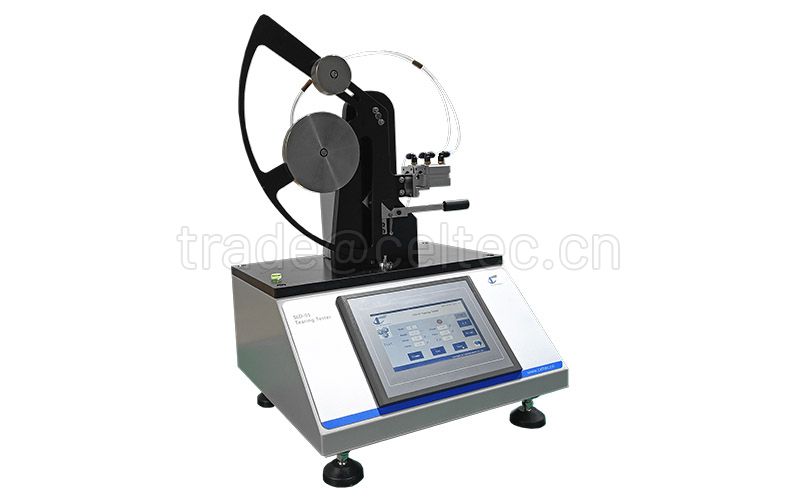
Why is Tear Testing Important?
Tear testing plays a vital role in materials science and engineering by offering valuable insights into a material’s resistance to tearing. Its importance extends across multiple aspects of product development, quality assurance, and safety. Here’s why tear testing is essential:
- Understanding Material Performance: Tear testing helps determine how a material behaves when subjected to forces that may cause tearing. This understanding allows manufacturers to predict a material’s durability and performance in practical, real-world conditions.
- Ensuring Quality Control: In industries such as textiles, packaging, and automotive manufacturing, tear resistance is a critical quality parameter. Tear testing provides a reliable, standardized method for evaluating this property, helping to maintain consistent product quality.
- Informing Product Design and Material Selection: Knowing a material’s tear strength enables engineers and designers to choose appropriate materials for specific applications. This ensures that products are built to withstand operational stresses, enhancing both performance and lifespan.
- Supporting Safety Requirements: In many applications—such as parachutes, protective clothing, or vehicle airbags—tear resistance is directly tied to safety. Tear testing delivers the data needed to verify that materials can perform reliably under potentially dangerous conditions.
- Facilitating Regulatory Compliance: Numerous industries enforce strict regulations concerning material properties. Tear testing allows manufacturers to demonstrate compliance with these standards, ensuring products are safe, reliable, and market-ready.
- Promoting Cost Efficiency: By identifying materials with the appropriate tear resistance for each application, manufacturers can reduce material waste, avoid premature product failures, and lower long-term production costs.
- Building Consumer Confidence: Products tested for tear resistance and certified to meet quality standards provide reassurance to consumers about their durability and reliability, strengthening brand reputation and customer trust.
- Reducing Environmental Impact: Properly selecting materials based on tear resistance minimizes the likelihood of product failure and replacement, contributing to resource conservation and sustainable manufacturing practices.
In summary, tear testing is far more than a routine laboratory procedure. It’s an essential component of materials evaluation that influences product design, operational safety, compliance, cost management, and environmental responsibility. By bridging theoretical analysis and practical application, tear testing ensures that materials and products perform as intended in everyday use.
Advantages of Tear Testing
Tear testing provides a range of benefits that make it an indispensable method in materials evaluation, product design, and quality management. Below are the key advantages of incorporating tear testing into material analysis processes:
- Accurate Quantitative Data: Tear testing delivers precise numerical values for a material’s tear resistance, enabling objective comparisons between different materials, production batches, or treatment processes. This quantitative data supports informed decisions in material selection, process optimization, and product development.
- Compliance with Industry Standards: By following established standards such as TAPPI T-414, ASTM D1922, ASTM D1424, ASTM D689, ISO 1974, CPPA d.9, AS/NZ 1301.400S, BS 4468 and SCAN P-11., tear testing ensures consistency and reliability in test results. This is crucial for regulatory compliance, certification processes, and facilitating international trade.
- Improved Material Selection: The data obtained from tear testing helps engineers and designers select materials that are best suited for specific operational requirements, improving product performance, durability, and user satisfaction.
- Enhanced Product Safety: In applications where tear resistance is a critical safety factor—such as automotive restraints, protective gear, or industrial membranes—tear testing helps verify that materials meet safety specifications, reducing the risk of in-service failures.
- Reliable Quality Control: Tear testing can be integrated into routine quality assurance protocols, ensuring that products consistently meet required performance standards. This enhances customer confidence and supports brand integrity.
- Cost-Effective Manufacturing: By identifying the most suitable materials early in the design and production process, tear testing reduces the likelihood of product defects, failures, and costly recalls or warranty claims, contributing to overall cost efficiency.
- Tailored Testing Methods: A variety of tear test techniques, such as the Elmendorf Tear Test, Trouser Tear Test, or Single-Tear Test, can be selected based on material type and application, providing flexible, application-specific insights.
- Predictive Performance Insights: Tear testing offers valuable predictions of how materials will perform under real-world conditions, allowing manufacturers to anticipate and address potential performance issues before products reach the market.
- Environmental Benefits: Selecting appropriate, durable materials through tear testing minimizes material waste, reduces the need for replacements, and contributes to more sustainable manufacturing practices.
- Supports Innovation and R&D: Tear testing plays a crucial role in research and development, supplying essential data for the creation of new materials or the enhancement of existing products. It accelerates innovation by validating material performance under controlled, measurable conditions.
In summary, tear testing is far more than a simple mechanical test — it’s a strategic tool that supports quality assurance, product safety, cost management, regulatory compliance, and sustainable design. Its versatility and value make it a cornerstone in modern materials science, engineering, and manufacturing industries.
How is Tear Testing Calculated?
Tear testing determines a material’s resistance to tearing by measuring the force required to initiate or propagate a tear. The calculation process may vary depending on the type of test method used and the material properties. Below is a general outline of how tear testing is performed and calculated:
- Näytteen valmistelu: Test specimens are prepared in accordance with the specific standard being followed, such as ASTM, ISO, or EN methods. This typically involves cutting the material into a designated shape—like trouser, tongue, or wing specimens—and creating a preliminary cut or notch to start the tear.
- Test Equipment Setup: The prepared sample is secured in a testing machine capable of applying a controlled tearing force. Depending on the test method, this may be a tensile testing machine, a pendulum tear tester (as used in the Elmendorf method), or other specialized equipment.
- Application of Force: A controlled force is applied to the specimen, either by pulling (in tensile-based tear tests) or by impacting (in pendulum-based tests). The applied force is continuously monitored through sensors such as load cells.
- Force Measurement: The force needed to either initiate the tear or continue its propagation is recorded. Depending on the test type, this may involve capturing the peak force, the average tearing force over a specific distance, or the force at a predefined point in the test.
- Calculating Tear Strength or Resistance: The measured force is then used to calculate the material’s tear strength. Typically, this involves dividing the force by a dimensional factor such as the specimen’s thickness or width.
- Control of Test Variables: Factors like testing speed, ambient temperature, and humidity can significantly affect tear test results. These conditions should be carefully controlled during testing or noted in the final analysis for accurate interpretation.
- Reporting Results: Test results are usually presented in standardized units relevant to the application and material type — such as Newtons (N) or pounds-force (lbf) for the tearing force, and N/mm or lbf/in for tear strength.
By following these procedures, tear testing delivers reliable, quantifiable data that can be used for material selection, quality assurance, and product development across a wide range of industries.