
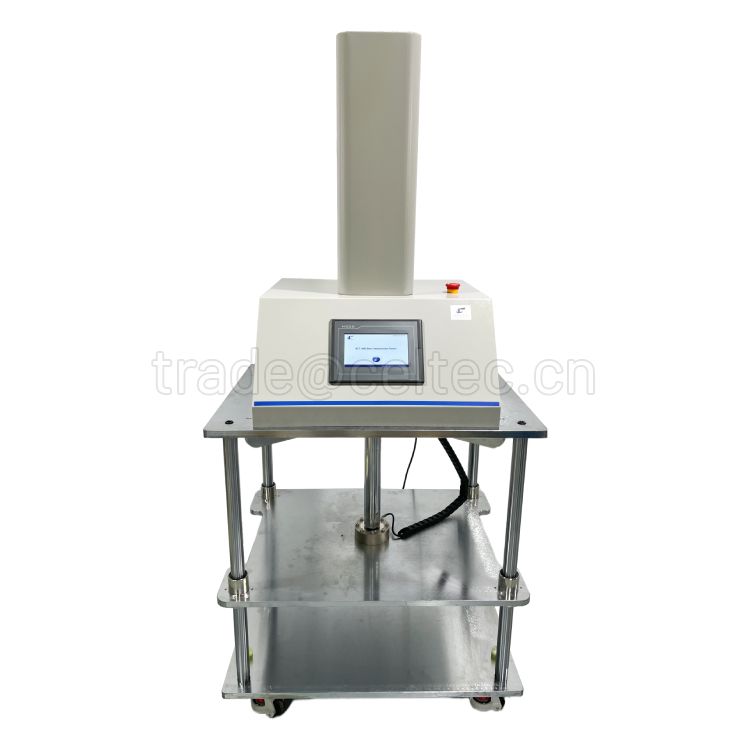
Was ist der Box Compression Tester?
Kasten-Druckprüfgeräte sind unverzichtbare Hilfsmittel zur Gewährleistung der Qualität und Haltbarkeit von Verpackungsmaterialien. Durch die Messung der Kraft, der ein Karton standhalten kann, bevor er zusammenbricht, liefern diese Prüfgeräte genaue und zuverlässige Daten, die Hersteller zur Verbesserung ihrer Produkte und zur Einhaltung von Industriestandards nutzen können.
Grundlagen der Karton-Druckprüfung
Um eine Druckprüfung an einem Karton durchzuführen, wird ein Musterkarton auf eine ebene Fläche gelegt und von oben mit einer Druckkraft belastet. Die Kraft wird schrittweise erhöht, bis der Karton zusammenbricht oder eine vorgegebene Grenze erreicht ist. Die Kraft, die erforderlich ist, um den Karton zu zerdrücken, wird in Pfund oder Kilogramm gemessen, und dieser Wert wird zur Berechnung der Druckfestigkeit des Kartons herangezogen.
Warum genaue Ergebnisse wichtig sind
Ein Unternehmen, das empfindliche elektronische Bauteile herstellt. Diese Bauteile müssen sorgfältig verpackt werden, um Beschädigungen während des Transports zu vermeiden. Das Unternehmen verwendet Kartons aus einer bestimmten Art von Pappe, von der es glaubt, dass sie stabil genug ist, um die Bauteile zu schützen.
Das Unternehmen führt jedoch keine regelmäßigen Druckprüfungen an Wellpappkartons durch, um deren Festigkeit sicherzustellen. Infolgedessen werden einige der Komponenten während des Transports beschädigt, was zu Kundenbeschwerden, Rücksendungen und Umsatzverlusten führt.
Bei der Untersuchung des Problems stellt das Unternehmen fest, dass die von ihm verwendeten Kartons eine geringere Druckfestigkeit aufweisen, als ursprünglich angenommen. Hätte das Unternehmen regelmäßig Druckfestigkeitstests an den Kartons durchgeführt, wäre dies bekannt gewesen, und es hätte ein widerstandsfähigeres Material für seine Kartons wählen können.
In diesem Beispiel hätten präzise Ergebnisse der Karton-Druckprüfung dem Unternehmen helfen können, kostspielige Probleme wie Kundenbeschwerden und Rücksendungen zu vermeiden und den Bedarf an einem stabileren Verpackungsmaterial zu erkennen, um die Produkte während des Transports besser zu schützen.
Genaue Ergebnisse bei Karton-Druckprüfungen sind aus mehreren Gründen von entscheidender Bedeutung. In erster Linie liefern sie wertvolle Informationen über die Qualität und Festigkeit des verwendeten Verpackungsmaterials. Ungenaue Testergebnisse können dazu führen, dass Produkte nicht den Branchenstandards entsprechen oder während des Transports leicht beschädigt werden. Dies kann zu Kundenbeschwerden, Rücksendungen und sogar zu rechtlichen Problemen führen, wenn Produkte während des Transports beschädigt werden.
Durch die Auswertung der Testergebnisse können Hersteller Schwachstellen in ihren Verpackungsmaterialien erkennen und Anpassungen vornehmen, um deren Festigkeit und Haltbarkeit zu verbessern. Dies kann langfristig zu Kosteneinsparungen sowie zu einer höheren Kundenzufriedenheit und -bindung führen.
Faktoren, die die Testergebnisse beeinflussen
Mehrere Faktoren können die Genauigkeit der Ergebnisse bei Druckprüfungen an Kartons beeinflussen. Dazu gehören die Art des zu prüfenden Kartons, die verwendete Prüfmethode und der Zustand der Prüfgeräte. Um genaue Ergebnisse zu gewährleisten, ist es unerlässlich, branchenübliche Prüfverfahren einzuhalten und gut gewartete sowie kalibrierte Geräte zu verwenden.
1. Kompressionsgeschwindigkeit:
Die Geschwindigkeit, mit der die Schachtel zusammengedrückt wird, kann die Testergebnisse beeinflussen. Ist die Kompressionsgeschwindigkeit zu hoch, kann dies aufgrund des viskoelastischen Verhaltens der Schachtel zu ungenauen Messwerten führen.
2. Temperatur und Luftfeuchtigkeit:
Die Temperatur und Luftfeuchtigkeit der Prüfumgebung können die Eigenschaften des Materials und damit auch die Prüfergebnisse beeinflussen. Höhere Temperaturen und Luftfeuchtigkeit können dazu führen, dass das Material weicher wird, was eine geringere Druckfestigkeit zur Folge hat.
3. Größe und Gestaltung der Verpackung:
Die Größe und die Konstruktion der zu prüfenden Schachtel können die Ergebnisse beeinflussen. Bei einer größeren Schachtel ist möglicherweise eine höhere Druckkraft erforderlich, um ihre Bruchgrenze zu erreichen, während eine kleinere Schachtel bereits bei einer geringeren Kraft brechen kann. Ebenso kann die Konstruktion einer Schachtel, beispielsweise das Vorhandensein von Laschen oder Verstärkungen, ihre Druckfestigkeit beeinflussen.
4. Randeffekte:
Die Kanten des zu prüfenden Behälters können aufgrund von Herstellungsfehlern oder Spannungskonzentrationen anfälliger für Defekte sein. Kanteffekte können zu uneinheitlichen Ergebnissen führen, weshalb unbedingt sichergestellt werden muss, dass die Kanten des Behälters in gutem Zustand und einheitlich sind.
5. Kalibrierung der Geräte:
Die Genauigkeit der Testergebnisse hängt von den zur Durchführung des Tests verwendeten Geräten ab. Es ist von entscheidender Bedeutung, sicherzustellen, dass die Geräte korrekt kalibriert sind und dass mögliche Fehler oder Fehlfunktionen vor der Durchführung des Tests behoben werden.
6. Stichprobengröße:
Die Größe der getesteten Proben kann die Ergebnisse beeinflussen. Die Prüfung einer größeren Stichprobe kann ein repräsentativeres Bild der Druckfestigkeit des Materials liefern.
Wer benötigt einen Karton-Druckfestigkeitsprüfer?
Dieses Prüfgerät ist für Hersteller von Verpackungsmaterialien, Mitarbeiter in der Qualitätskontrolle und Versandunternehmen unverzichtbar. Es ist zudem von entscheidender Bedeutung für Branchen, in denen der physische Schutz der Produkte während des Transports und der Handhabung oberste Priorität hat, wie beispielsweise bei Herstellern von Elektronik, Haushaltsgeräten und Konsumgütern.
Warum ist die Kasten-Druckprüfung wichtig?
Die Prüfung der Druckfestigkeit von Kartons ist aus mehreren Gründen von entscheidender Bedeutung:
- Qualitätssicherung: Stellt sicher, dass die Verpackung den physischen Belastungen durch Transport, Handhabung und Stapelung während der Lagerung standhält.
- Kosteneffizienz: Hilft bei der Auswahl des richtigen Verpackungsmaterials, das kostengünstig ist, ohne dabei Abstriche bei der Qualität zu machen, und vermeidet überdimensionierte und teurere Lösungen.
- Kundenzufriedenheit: Verringert das Risiko von Produktschäden während des Transports, was zu weniger Rücksendungen und einer höheren Kundenzufriedenheit führt.
- Einhaltung von Vorschriften: Erfüllt verschiedene nationale und internationale Verpackungsnormen, die in bestimmten Branchen erforderlich sein können.
Die wichtigsten Merkmale eines guten Karton-Druckprüfgeräts
Bei der Auswahl eines Box Compression Tester, sollten Sie die folgenden Funktionen berücksichtigen, um sicherzustellen, dass es Ihren Anforderungen entspricht:
- Genauigkeit: Hochpräzise Sensoren, die zuverlässige und wiederholbare Ergebnisse liefern.
- Langlebigkeit: Robuste Bauweise, geeignet für industrielle Umgebungen.
- Benutzerfreundlichkeit: Benutzerfreundliche Oberfläche mit digitalen Bedienelementen und Anzeigen.
- Anpassungsfähigkeit: Möglichkeiten zur Anpassung von Tragfähigkeiten, Abmessungen und Software an spezifische Prüfanforderungen.
- Integration: Möglichkeiten zur Integration mit anderen Qualitätsmanagementsystemen für eine umfassende Überwachung und Analyse.
Anwendungen von Box Compression Testers
- Verpackungsentwicklung: Wird in der Entwurfsphase zum Testen und Optimieren von Verpackungsmaterialien verwendet.
- Produktionssteuerung: Regelmäßige Kontrollen während der Produktion gewährleisten eine gleichbleibende Qualität.
- Forschung und Prüfung: Hilft bei der Entwicklung neuer Verpackungsmaterialien und der Verbesserung bestehender Designs.
Box Compression Tester sind von unschätzbarem Wert für Unternehmen, die sich auf die Sicherheit und Unversehrtheit ihrer Verpackungen verlassen, um ihre Produkte während des Transports und der Lagerung zu schützen, und die sicherstellen, dass alle Verpackungen den erforderlichen Normen und Spezifikationen entsprechen.
Häufig gestellte Fragen zu Box Compression Testers
F1: Wer sollte einen Box Compression Tester verwenden?
A1: Hersteller von Verpackungsmaterial, Qualitätskontrolllabors und Unternehmen, die mit Versand und Logistik zu tun haben, können vom Einsatz eines BCT profitieren. Es ist besonders nützlich für Branchen, in denen der Produktschutz von entscheidender Bedeutung ist, z. B. in der Elektronik-, Pharma-, Lebensmittel- und Getränkeindustrie.
F2: Was sind die Hauptvorteile der Verwendung eines Box Compression Testers?
A2: Zu den wichtigsten Vorteilen gehören die Gewährleistung, dass die Verpackung physischen Belastungen standhält, die Optimierung des Verpackungsmaterials, um Kosten zu sparen, die Einhaltung von Industriestandards, die Verringerung von Produktschäden während des Versands und die Verbesserung der Kundenzufriedenheit durch zuverlässige Produktlieferung.
F3: Kann der Box Compression Tester für verschiedene Größen und Arten von Verpackungen angepasst werden?
A3: Ja, viele BCT-Modelle sind anpassungsfähig und können für verschiedene Verpackungsgrößen und -materialien angepasst werden, so dass sie für unterschiedliche Produkte und Verpackungsdesigns geeignet sind.
F4: Auf welche Merkmale sollte ich bei der Auswahl eines Kompressionsprüfers achten?
A4: Achten Sie auf Merkmale wie die maximale Kraftkapazität, die Größe der Druckplatte, die Benutzerfreundlichkeit, die digitale Steuerung für eine präzise Bedienung, die Möglichkeit der Datenaufzeichnung und die Fähigkeit zur Integration mit anderen Prüfsystemen.
F5: Wie kann ein Box Compression Tester bei der Verbesserung des Verpackungsdesigns helfen?
A5: Durch die Prüfung verschiedener Materialien und Konstruktionen unter kontrollierten Bedingungen können Unternehmen die effizientesten und kostengünstigsten Verpackungslösungen ermitteln. Kontinuierliche Tests ermöglichen Innovationen und Verbesserungen im Verpackungsdesign und gewährleisten optimalen Schutz und Leistung.
F6: Ist für die Bedienung eines Box Compression Testers eine Schulung erforderlich?
A6: In der Regel ist eine Grundschulung erforderlich, um sicherzustellen, dass die Bediener die Maschine effektiv und sicher nutzen können. Viele Hersteller bieten zum Zeitpunkt des Kaufs Schulungen an, und einige stellen auch Handbücher und Online-Tutorials zur Verfügung.
F7: Wo kann ich einen Box Compression Tester kaufen?
A7: BCTs können von Herstellern bezogen werden, die auf Prüfgeräte für die Verpackungsindustrie spezialisiert sind. Es ist ratsam, einen Lieferanten zu wählen, der einen guten Kundendienst bietet und in der Lage ist, Kalibrierungs- und Wartungsdienste anzubieten.
Schlussfolgerung
A Box Compression Tester ist ein unschätzbares Werkzeug für alle, die mit der Herstellung, Prüfung oder dem Versand von verpackten Waren zu tun haben. Es stellt sicher, dass die Verpackung den harten Bedingungen von Transport und Lagerung standhält und hilft, die Produktintegrität und Kundenzufriedenheit zu erhalten. Durch das Verständnis der Fähigkeiten und Merkmale einer Box Compression Tester, können Unternehmen besser sicherstellen, dass ihre Verpackungsstrategien sowohl den Erwartungen der Verbraucher als auch den gesetzlichen Normen entsprechen.