
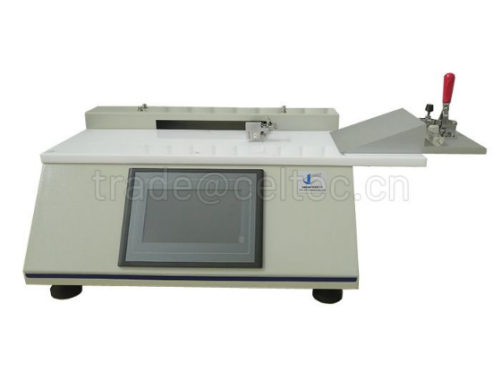
تحدد المواصفة ASTM D5458 ما يلي اختبار التشبث بالتقشير المعياري لقياس التفاعل اللاصق بين طبقتين من غشاء اللف المطاطي في ظروف التمدد وغير الممدودة. تحدد الطريقة الإجراءات التفصيلية لإعداد العينة وإعداد الجهاز وتنفيذ الاختبار وتحليل البيانات لضمان اتساق النتائج وقابليتها للمقارنة بين المختبرات والموردين. تشتمل المعدات الرئيسية على آلة اختبار عالمية مزودة بجهاز اختبار عالمي مزود بأداة تثبيت مائلة مائلة متخصصة وخلية تحميل 500 جم لتسجيل قوى التقشير بمعدل فصل قبضة ثابت.
مقدمة
خلفية فيلم التغليف المطاطي
تُستخدم أغشية التغليف المطاطية - المصنوعة عادةً من البولي إيثيلين الخطي منخفض الكثافة - على نطاق واسع لتوحيد أحمال المنصات النقالة وتثبيتها من خلال الالتصاق بإحكام حول المنتجات عند تطبيق الشد. وتتيح المرونة المتأصلة في الغشاء وخصائص الالتصاق في الطبقات المتعددة الالتصاق، مما يشكل عبوة آمنة تقاوم التحول أثناء المناولة والنقل.
أهمية الالتصاق في التغليف
تُعد قوة الالتصاق أمرًا بالغ الأهمية للحفاظ على سلامة التحميل، حيث يمكن أن يؤدي عدم كفاية الالتصاق إلى انزلاق الطبقات وضعف الثبات واحتمال تلف المنتج أثناء الشحن. من خلال تحديد قوة التقشير، يمكن للمصنعين والمستخدمين النهائيين اختيار الأغشية التي تقدم أداءً متسقًا وتحسين استخدام المواد وتقليل النفايات.
نطاق وأهمية معيار ASTM D5458
نطاق المعيار
تنطبق المواصفة ASTM D5458 على أغشية التغليف القابلة للتمدد في كل من حالتي التمدد وعدم التمدد وتوفر إجراءات لتحديد القوة المطلوبة لتقشير شريط غشاء بقياس 1 بوصة (25 مم) من سطح غشاء مسطح. يتم الإبلاغ عن النتائج بوحدات البوصة - الرطل (مع توفير تحويلات النظام الدولي للوحدات للمعلومات) وتعمل كمعيار لمقارنة المنتج.
الأهمية والاستخدام
هذا غشاء بلاستيكي قابل للتمدد مقشر ملتصق طريقة الاختبار يمكّن مختبرات مراقبة الجودة من التحقق من أن الرقائق تفي بمواصفات أداء التشبث، مما يدعم عمليات تأمين التحميل الموثوقة في التخزين والتوزيع. كما أنه يوجه جهود البحث والتطوير في صياغة الأغشية من خلال ربط خصائص المواد - مثل نوع الراتنج والمواد المضافة والسماكة - بسلوك التشبث القابل للقياس.
إجراء الاختبار
تحضير العينة
تتضمن عينات الفيلم عينة “قاعدة” كبيرة مثبتة على التركيب المائل وشرائط أصغر مقاس 1 بوصة. × 5 بوصة مثبتة على مشابك. يتبع تكييف الأغشية (على سبيل المثال، درجة الحرارة والرطوبة) الممارسة D4332 لتقليل التأثيرات البيئية على قياسات التشبث.
المعدات والإعدادات
يلزم وجود ماكينة اختبار عامة مزودة بفاصل قبضة ثابت المعدل وخلية تحميل 500 جم، إلى جانب
- مقابض خفيفة الوزن ذات وجه مطاطي (1 × 1.5 بوصة). .
- مرفقات التثبيت والتركيبات المشبكية (انظر أشكال ASTM).
- قاطع عينات دقيق وورق فصل دقيق لحواف نظيفة.
إجراءات الاختبار
قم بتثبيت الغشاء الأساسي على السطح المائل (الوجه الخارجي لأعلى) وقم بتثبيت الطرف الحر بقضيب فولاذي لتطبيق التمدد المسبق المطلوب. ضع شريط الرقاقة على السطح المائل، وقم بالضغط بشكل منتظم لتثبيت التلامس، ثم قم بتثبيت الطرف الحر للشريط بمشبك ماكينة الاختبار. بدء فصل القبضة بالمعدل القياسي (على سبيل المثال، 12 بوصة/دقيقة) وتسجيل ذروة القوة عند تقشير الشريط من القاعدة.
حساب قوة التشبث
تُعرّف قوة التشبث بأنها أقصى قوة تقشير لكل وحدة عرض (على سبيل المثال، نيوتن/25 مم أو رطل/بوصة). يتم اختبار عدة مكررات (خمسة كحد أدنى) لحساب المتوسط وتقييم التباين.
الدقة وقابلية التكرار
تدعم الدراسات المشتركة بين المختبرات (على سبيل المثال، الممارسة E691) بيانات الدقة الخاصة بالمعيار، والتي تشير إلى حدود التكرار والتكرار النموذجية لقياسات التشبث. يجب على المستخدمين الرجوع إلى جداول الدقة في وثيقة ASTM الرسمية لتفسير عدم اليقين في القياس.
اعتبارات ونصائح عملية
تأكد من خلو أسطح الأغشية من الغبار أو الزيوت أو الشحنات الساكنة التي يمكن أن تحرف نتائج التشبث. معايرة آلة الاختبار بانتظام والتحقق من دقة خلية التحميل للحفاظ على سلامة البيانات. عند مقارنة الأغشية، حافظ على اتساق الظروف البيئية واتجاه العينة.
الخاتمة
يوفر المعيار ASTM D5458 طريقة قوية وقابلة للتكرار لتقييم أداء الالتصاق بالتقشير لأغلفة التغليف القابلة للتمدد، مما يسهل مراقبة الجودة وتطوير المنتجات في صناعة التغليف. من خلال اتباع الإجراء الموحد ومراعاة المقاييس الدقيقة، يمكن للمصنعين والمستخدمين النهائيين تقييم التصاق الأغلفة بشكل موثوق وتحسين المواد وضمان ثبات الحمل الآمن.
لمزيد من الإرشادات الفنية أو للحصول على مزيد من الإرشادات الفنية أو للحصول على معدات اختبار التشبث المعايرة، يُرجى الاتصال بنا؛ بصفتنا المورد الموثوق به, Cell Instruments تقديم حلول اختبار شاملة مصممة خصيصاً لتلبية متطلبات أداء اللفائف المطاطية.
إذا كنت ترغب في الحصول على مزيد من المعلومات حول هذا المنتج، فلا تتردد في الاتصال بنا. نوصي بمنتجات شائعة أخرى لك: جهاز اختبار التقشير بالتقشير, جهاز اختبار قوة فتح الغطاء المركب من الألومنيوم والبلاستيك, جهاز اختبار المحاقن الطبية, جهاز اختبار تقشير الحاويات, مصنع الصين مصنع اختبار ختم الحرارة, جهاز اختبار الختم الحراري الصيني, القوى المؤثرة على مكبس المحقنة, حل اختبار المتانة المرن, مورد فاحص Cof, حل اختبار العبوات الطبية, جهاز اختبار قوة التسرب ومانع التسرب الصيني, محلول اختبار قوة التسرب والسدود, الشركة المصنعة لأجهزة اختبار الألواح الورقية, الشركة المصنعة لجهاز اختبار تقشير الأغشية القابلة للتمدد والتقشير, مصنع جهاز اختبار تقشير الأغشية القابلة للتمدد والتقشير, خدمات اختبار تقشير الأغشية القابلة للتمدد والتقشير, مصنع اختبار الختم الحراري المتدرج, جهاز اختبار الختم الحراري المتدرج بالجملة, جهاز اختبار الختم الحراري المتدرج الصين, جهاز اختبار الأغشية البلاستيكية | 、 مصنع اختبار البلاستيك, جهاز اختبار سماكة الورق والألواح بالجملة, الشركة المصنعة لجهاز اختبار التقشير المتقشر, جهاز اختبار التقشير المتقشر الصيني, خدمات اختبار التقشير بالتقشير, محلول اختبار التقشير بالتقشير