ASTM D6392 yra kritinis standartas, naudojamas vertinant geomembranų siūlių, suformuotų termofuzijos metodais, vientisumą. Tokiose srityse kaip sąvartynai, kalnakasybos apsaugos priemonės ir vandens rezervuarai, siūlės gedimas gali turėti rimtų ekologinių ir finansinių pasekmių. Todėl patikimi bandymų metodai yra labai svarbūs siekiant užtikrinti ilgalaikes eksploatacines savybes.
Šiame vadove paaiškinami ASTM D6392 apibrėžti principai, procedūros ir praktiniai bandymų aspektai, kartu padedant kokybės kontrolės specialistams pasirinkti tinkamą siūlių stiprumo testeris kad rezultatai būtų tikslūs ir pakartojami.
ASTM D6392 geomembranų siūlių vientisumo bandymas
Svetainė geomembranų siūlių vientisumo bandymas aprašyta ASTM D6392, daugiausia dėmesio skiriama ardomieji bandymų metodai įvertinti siūlės veikimą. Jis taikomas būtent nesustiprintos geomembranos sujungti termofuzijos būdu.
Standarte pabrėžiami du pagrindiniai testavimo būdai:
- Nulupimo bandymas (T-peel)
- Šlyties bandymas
Šiais bandymais imituojamos realios apkrovos sąlygos, kad būtų galima nustatyti galimus siūlės trūkumus, pavyzdžiui, atsiskyrimą, netinkamą sukibimą ar ankstyvą gedimą.
Pagrindinis tikslas:
Užtikrinkite, kad siūlės būtų pakankamai tvirtos ir patvarios, kad eksploatacijos metu būtų išvengta nuotėkio ar atsiskyrimo.
Geomembranos šlyties stiprumo bandymas
Svetainė geomembranų atsparumo šlyčiai bandymas įvertinamas siūlės atsparumas jėgoms, veikiančioms lygiagrečiai su klijuojama sąsaja.
Bandymo procedūros apžvalga
- Paruoškite penki egzemplioriai nuo siūlės
- Saugiai užspauskite bandinius per visą plotį
- Naudokite kontroliuojamą kryžminės galvutės greitį:
- 50 mm/min HDPE ir LMDPE
- 500 mm/min tokioms medžiagoms kaip LLDPE ir PVC.
- Tęskite bandymus:
- Iki 50% pailgėjimas (HDPE, LMDPE)
- Arba kol plyšimas (kitos medžiagos)
Ką jis matuoja
- Siūlės šlyties stipris
- Ilginimo elgsena
- gedimo būdas (pvz., siūlės trūkis ar medžiagos trūkis)
Praktinė įžvalga
Aukštos kokybės siūlės idealiu atveju turėtų sugesti pagrindinėje medžiagoje, o ne siūlėje., o tai rodo, kad sintezė yra tinkama.
Geomembranos T-žiedo bandymas
Svetainė geomembranos T-peel bandymas nustato siūlės atsparumą plėšimo jėgoms, kuriomis bandoma atskirti surištus sluoksnius.
Bandymo procedūros apžvalga
- Iškirpti penki bandiniai
- Suimkite abi siūlės puses nustatytu atstumu.
- Taikyti 90° T-peel konfigūracija
- Naudokite kontroliuojamą greitį:
- 50 mm/min HDPE, PVC
- 500 mm/min lanksčioms geomembranoms
- Tęskite iki plyšimo
Ką jis vertina
- Nulupimo stiprumas
- Klijų sukibimo kokybė
- Siūlių atskyrimo charakteristikos
Pagrindinis pastebėjimas
Inžinieriai kruopščiai registruoja:
- Lupimo stiprumo vertės
- Gedimo tipas (lipnumas ir lipnumas)
Šie rezultatai tiesiogiai padeda priimti sprendimus dėl statybos kokybės.
Siūlių stiprumo testeris pagal ASTM D6392
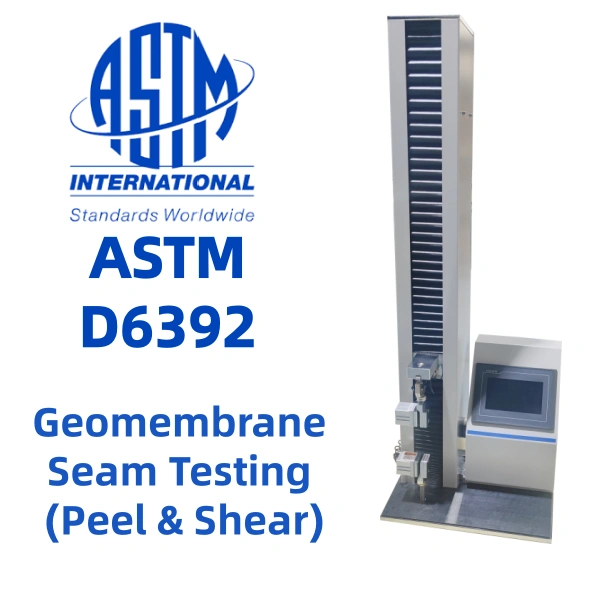
Norint tiksliai vykdyti ASTM D6392 standartą, reikia aukštos kokybės siūlių stiprumo testeris gali užtikrinti stabilų greičio valdymą, tikslų jėgos matavimą ir lanksčias laikiklių konfigūracijas.
Rekomenduojamas sprendimas: Cell Instruments tempimo testeris
Svetainė Cell Instruments TST-01 Siūlių stiprumo testeris dėl savo savybių puikiai tinka ASTM D6392 standarto taikymui:
- Didelis tikslumas (±0,5% FS) patikimų rezultatų užtikrinimas
- Platus greičio diapazonas (1-500 mm/min) apimantis visas reikalaujamas bandymo sąlygas.
- PLC valdoma sistema su HMI sąsaja intuityviam valdymui
- Rutulinis sraigtinis mechanizmas kad judesiai būtų sklandūs ir pasikartojantys.
- Suderinamumas su keliais šviestuvais atliekant šlyties ir T-plėšimo bandymus.
Dėl gebėjimo efektyviai perjungti bandymų režimus šis prietaisas idealiai tinka laboratorijoms, dirbančioms su įvairiomis geomembraninėmis medžiagomis.
Užtikrinkite, kad jūsų geomembranų siūlės atitiktų ASTM D6392 reikalavimus, atlikdami tikslius šlyties ir T-plėšimo bandymus. Cell Instruments siūlo pažangius tempimo bandymų sprendimus, skirtus tiksliam siūlių stiprumo įvertinimui, padedančius išlaikyti kokybę, sumažinti gedimų riziką ir užtikrinti atitiktį tarptautiniams standartams.
ASTM D6392 standarto svarba kokybės kontrolei
ASTM D6392 atlieka svarbų vaidmenį kokybės užtikrinimas (QA) ir kokybės kontrolė (QC) procesai:
- Prieš montuojant aptinka silpnas siūles
- Remia taisomuosius veiksmus statybos metu
- Sumažina ilgalaikio gedimo riziką
- Užtikrina atitiktį inžinerinėms specifikacijoms.
Užfiksuoti šie svarbiausi duomenys:
- Siūlių atskyrimo elgsena
- Pailgėjimas esant šlyties įtempiui
- Gedimo vieta ir tipas
Šios įžvalgos leidžia inžinieriams išlaikyti aukštus įrengimo standartus ir išvengti brangiai kainuojančio remonto.
DUK
1. Kam naudojamas ASTM D6392?
Jame vertinamas termofikuotų geomembranų siūlių vientisumas naudojant plėšimo ir šlyties bandymų metodus.
2. Kodėl reikalingi ir šlyties, ir T-plėšimo bandymai?
Jie imituoja įvairias apkrovos sąlygas ir leidžia visapusiškai įvertinti siūlės eksploatacines savybes.
3. Kokioms medžiagoms taikomas ASTM D6392?
Jis taikomas nesustiprintos geomembranos, pavyzdžiui, HDPE, LLDPE ir PVC.
4. Kas rodo, kad testavimas yra geras?
Nesėkmė pagrindo medžiagą, o ne siūlę. paprastai rodo stiprų ryšį.
5. Kokios įrangos reikia ASTM D6392 testavimas?
A tempimo bandymo mašina (siūlių stiprumo testeris) su tinkamais įtaisais, skirtais plėšimo ir šlyties bandymams atlikti.